Est. 2015
Specialised resources for therapists
and psychologists who are at risk of burnout
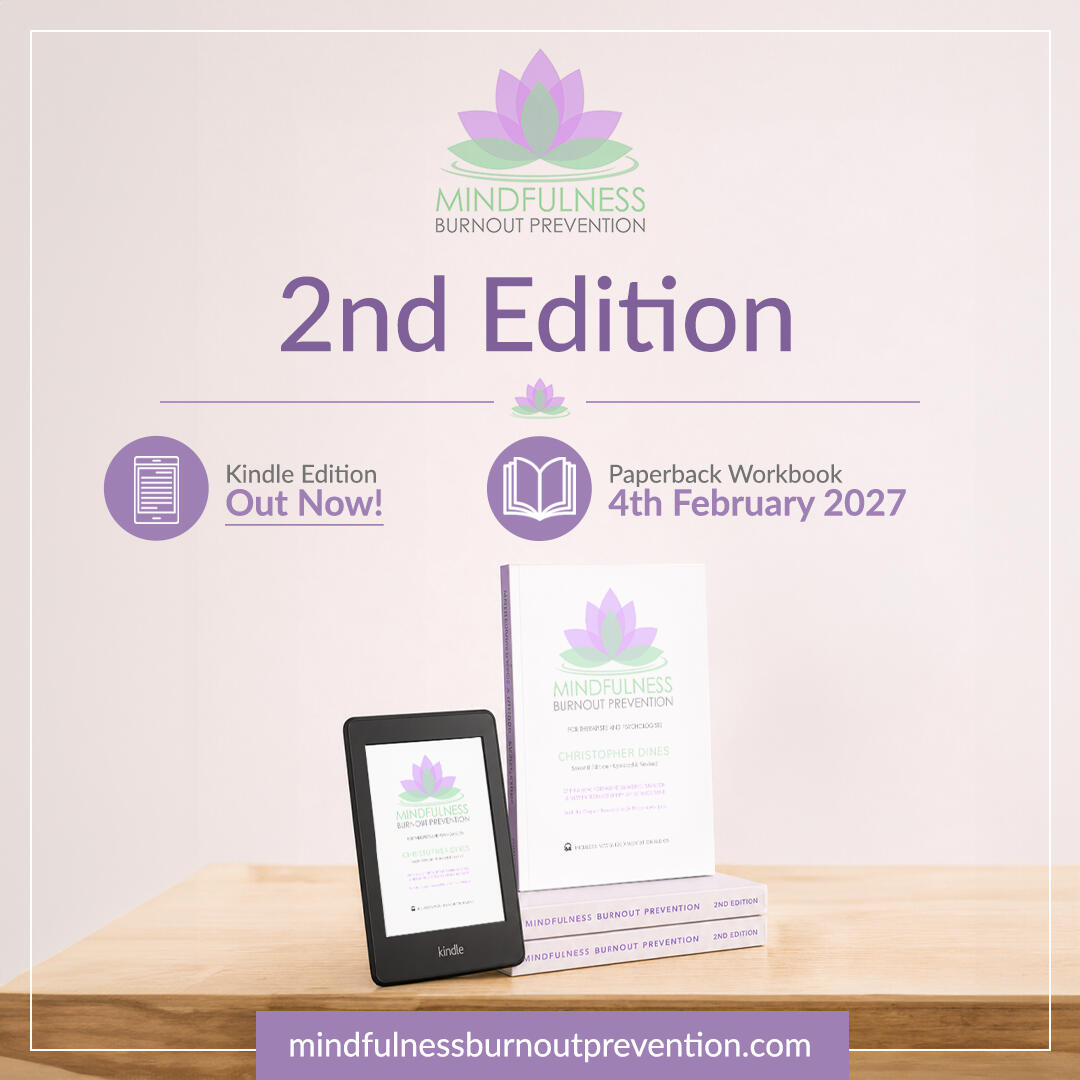
A very warm welcome, and thanks for dropping by. The second edition of Mindfulness Burnout Prevention (MBP) is out now on Kindle. The paperback workbook is scheduled to be published on the 4th of February 2027. This updated and revised edition features a new foreword by Meriel Stanton, an accomplished psychologist and psychotherapist, as well as a new introduction by Dr Bernice Sant, an experienced performance, sport and exercise psychologist. The foreword to the first edition, written by medical doctor and wellness pioneer, Dr Barbara Mariposa, is also included in the second edition.MBP includes a series of guided meditation and visualisation audios for you to enjoy. To access them, simply email [email protected] with proof of purchase (a digital receipt or screenshot is fine), and we will send you access to the full audio library. Thank you.
Mindfulness Burnout Prevention (MBP)
2nd Edition — Available Now
MBP Circle — Monthly Subscription Community
Sign Up To Our Monthly MBP Newsletter
1st Edition — Published in 2015
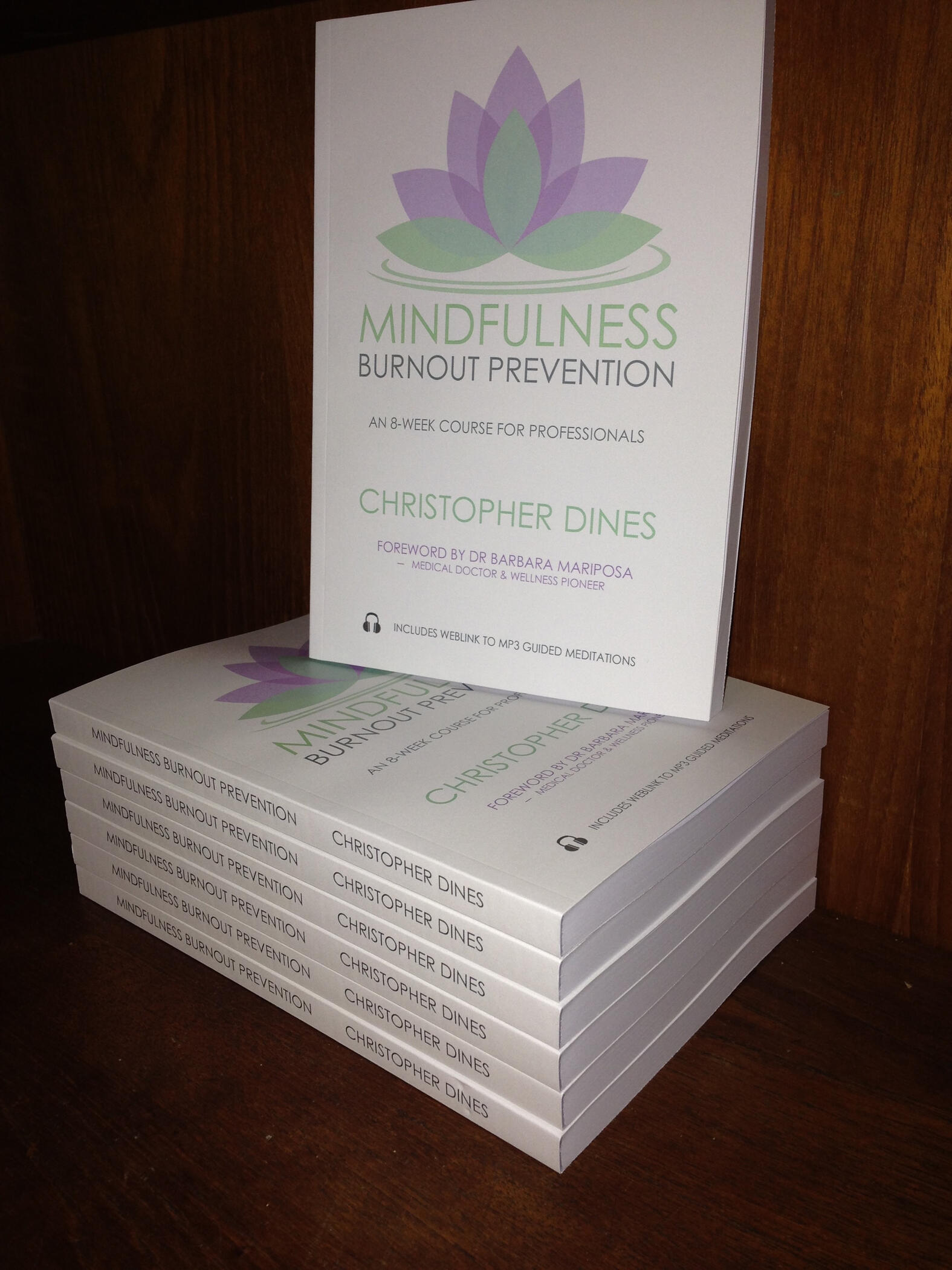
Mindfulness Burnout Prevention (1st Edition)
featured in the HuffPost UK in 2016








© Mindfulness Burnout Prevention (MBP). All rights reserved 2015-2026.
[email protected]
Est. 2015
About
Specialised resources to prevent
burnout and restore clarity

Since its first publication back in 2015, we have always had health professionals in mind. Over time, our clarity has deepened, and our commitment to supporting therapists and psychologists has become increasingly focused and purposeful.We understand and deeply appreciate the challenges that come with being a successful, in-demand therapist, counsellor, or psychologist. From nurturing your own mental and emotional health, to holding space for your clients, to the professional isolation that can often come with the role, all while navigating your own personal life, this work can be both rewarding and depleting.Mindfulness Burnout Prevention (MBP) provides specialised coaching and resources for therapists and psychologists who are at risk of burnout and emotional exhaustion, helping them cultivate resilience and experience greater clarity.Burnout and exhaustion are common risks over the span of a long career in mental health. And recovering from extreme burnout is rarely straightforward; it’s often a long, draining process. And so, we believe it makes sense to invest in your future by establishing strong, sustainable support—carefully placed structures that help you avoid burnout, rather than facing a potential 9–12 month recovery period. In more severe cases, recovery can stretch to 14–16 months.The data around burnout in your profession is consistent, although the degree of risk varies across different settings and specialisms. Psychotherapists working with eating disorders, psychologists trained in psychotherapy, professionals in private addiction treatment settings, and those in private practice appear to be particularly vulnerable.With a holistic coaching framework, we offer a strong and reliable partnership for mental health professionals. Your privacy is treated with the utmost respect and discretion.For more information on the MBP Circle monthly subscription community designed specifically for therapists and psychologists who are risk of burnout and emotional fatigue, email [email protected]
Founder
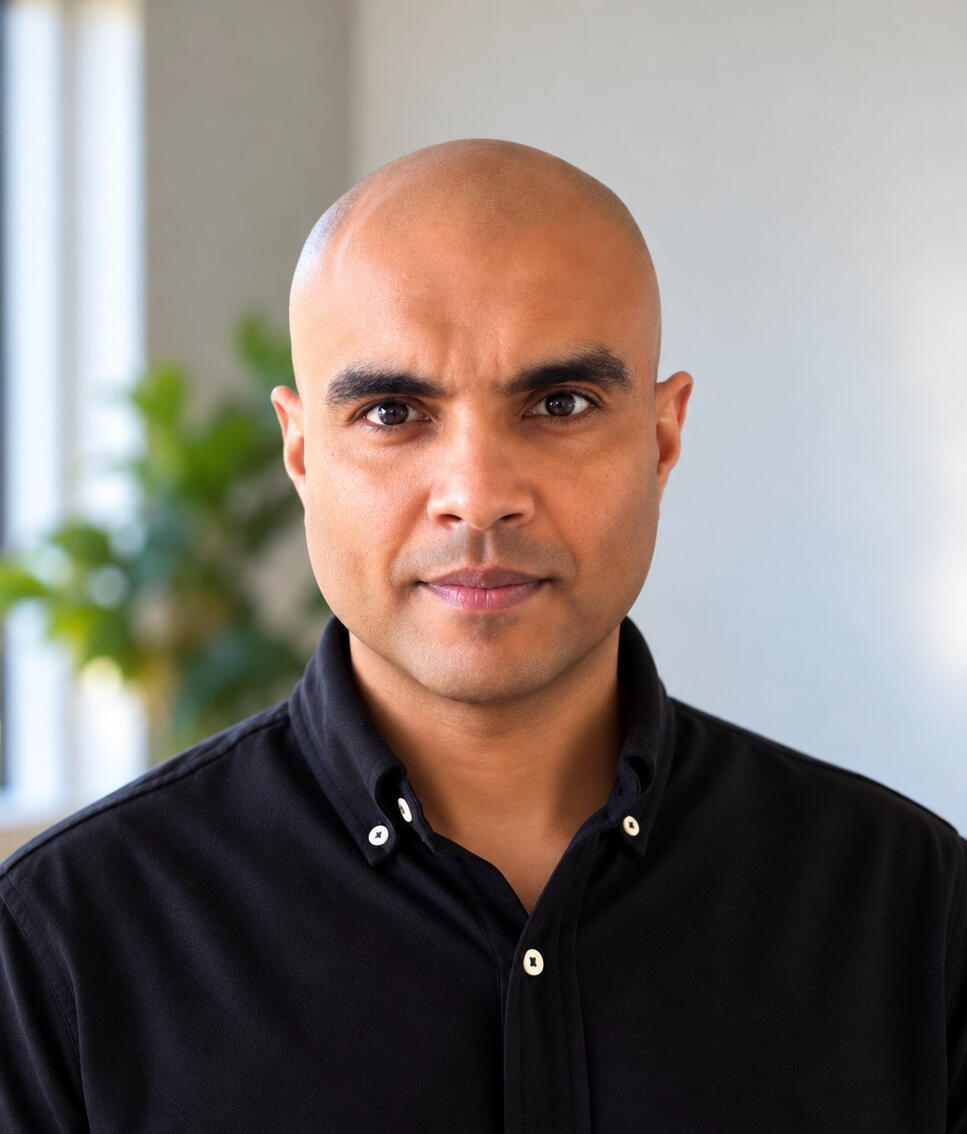
Christopher Dines is the founder of both IGITRO and Mindfulness Burnout Prevention (MBP). He is an executive consultant and coach serving high-performance individuals, a published author, and has a background in DJing and music production.He has published nine books on personal development, mindfulness and addiction, including The Kindness Habit, which he co-authored with Dr. Barbara Mariposa, a distinguished medical doctor. His book Super Self-Care received an endorsement from Eileen Rockefeller, an author and venture philanthropist. Christopher’s books have featured forewords by renowned figures such as Rudolph E. Tanzi, PhD, of Harvard Medical School, and the late John Bradshaw, #1 New York Times bestselling author, at The Meadows, Arizona.
Testimonials
“Christopher Dines gives you tools that will help you integrate your brain and ground yourself in your body through guided meditations, artistic expression and emotional training.”
— Rudolph E. Tazi, Professor of Neurology, Harvard Medical School."Christopher's excellent examples of ideas to help calm the mind and body, practice self-care and move through obstacles, is inspiring."
— Eileen Rockefeller, Author and Venture Capitalist“Christopher Dines' experiences and insight are shared in his book, 'Drug Addiction Recovery' for us all to learn from.”
— Peter Kyle MP, UK Secretary of State for Business and Trade“The Kindness Habit, co-authored by Christopher Dines and Dr Barbara Mariposa is the fruit of two very kind and courageous people. I have been lecturing on and writing about 'addictiveness' as the root of any addiction for many years. Now I have a book to recommend that illuminates the meaning and dynamics of 'addictiveness'.”
— John E. Bradshaw Snr, Three Times #1 New York Times bestseller, and senior fellow at The Meadows, AZ“I have worked with Christopher Dines for many years. He has worked for Harbor London as a mindfulness practitioner. He brings peer leadership in this field supported by his many years in supporting people to manage their own self-care through the development of strategies centred in emotional development and regulation. Christopher is a consummate professional, team player and has always received excellent feedback. I highly recommend him.”
— Paul Flynn, CEO, Harbor London Clinic in Belgravia, SW1.
© Mindfulness Burnout Prevention (MBP). All rights reserved 2015-2026.
[email protected]
Est. 2015
Community
True restoration of energy and
calm begins in community
MBP Circle for Therapists & Psychologists
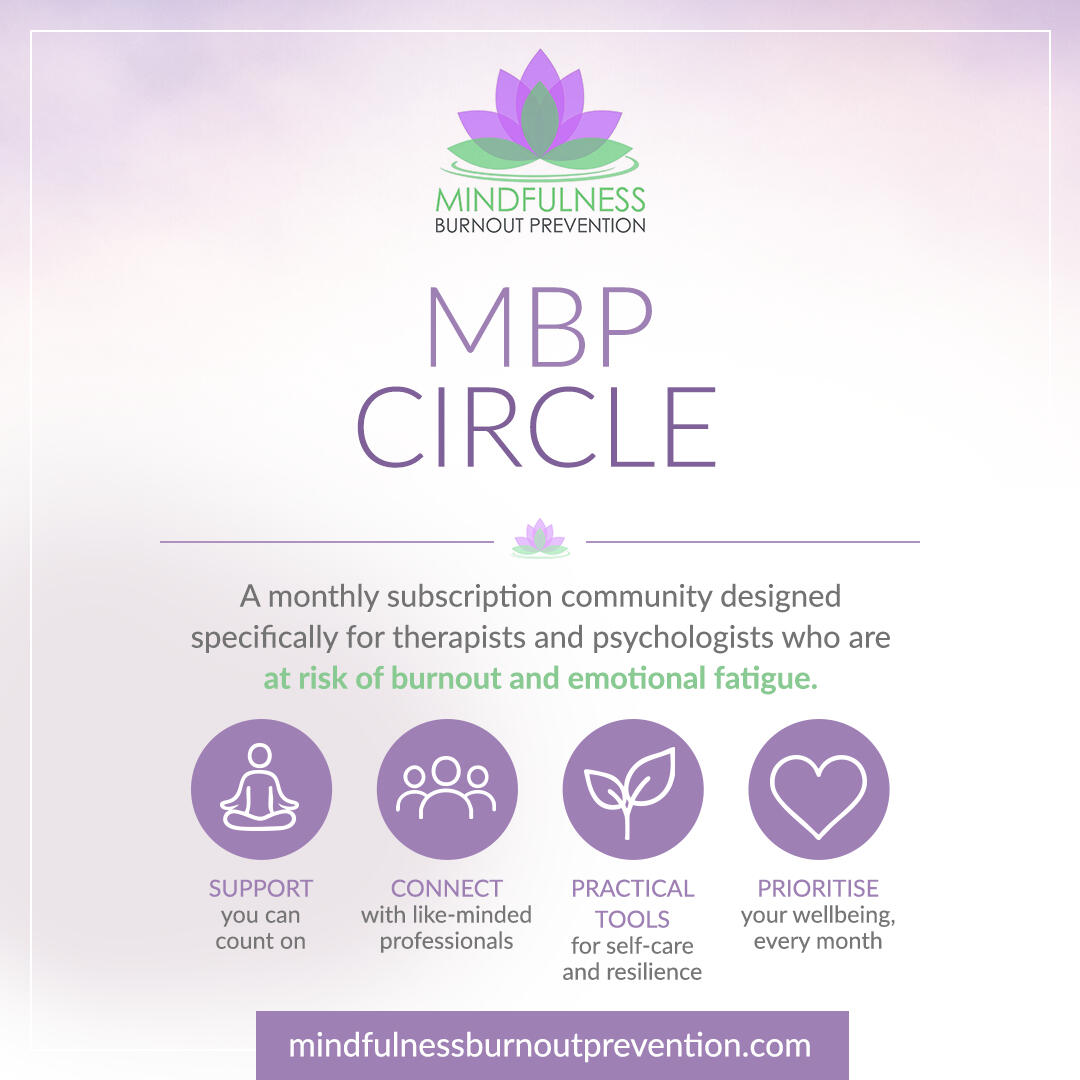
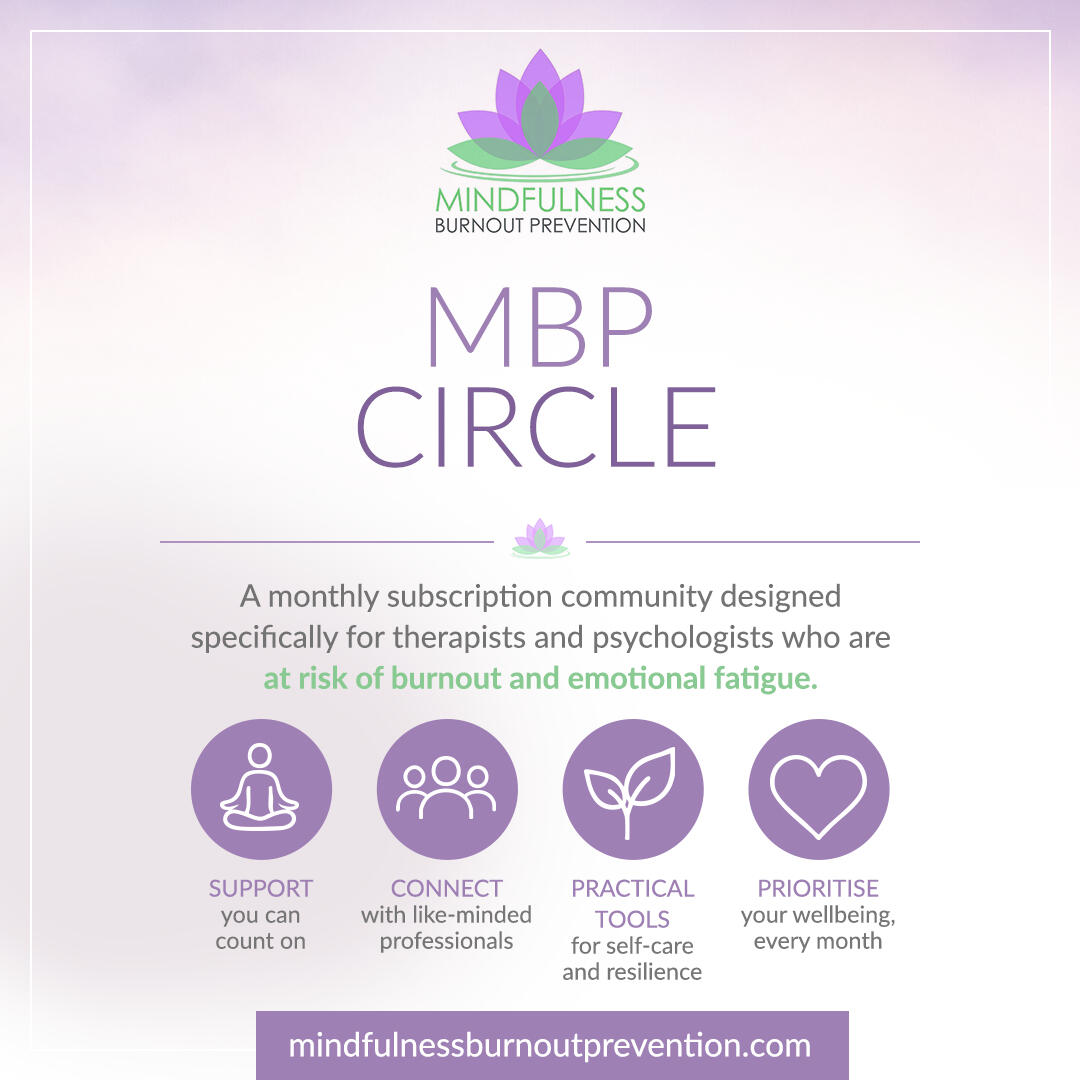
Therapeutic and psychological work is deeply meaningful and fulfilling, but it can also be emotionally demanding, isolating, and quietly depleting over time. Having a supportive community in place can make all the difference.MBP Circle is a monthly subscription community designed specifically for therapists and psychologists who are at risk of burnout and emotional fatigue. This isn’t about pushing through or over-adapting to unsustainable pressure. It’s about recognising your own pace, restoring energy, cultivating calm, and creating an emotionally supportive foundation for long-term wellbeing.
So, what’s included?
Members will receive:• Christopher Dines will facilitate a monthly live Zoom/Teams gathering, coaching, and guided mindfulness meditations video call• We’ll steadily work through the exercises in the second edition of Mindfulness Burnout Prevention (MBP), complementing the meditation period with reflection and shared experiences• A reflective space for nervous system regulation and burnout prevention• An environment that supports and encourages your personal and professional goals• Weekly mindfulness-based reminders• Peer connection and community support• A private space where likeminded therapists, counsellors, and psychologists can exhale• Occasional guest conversations• Priority access to retreats and dance movement events in London (community members hear first)
This is for you if ...
• You want to prevent burnout• Exhaustion is becoming all too familiar• You want to stay well and energised while continuing to serve others• You value mindfulness, emotional boundaries, and sustainable practice• You want to be in an environment that supports and encourages your personal and professional goals
About Your Group Facilitator
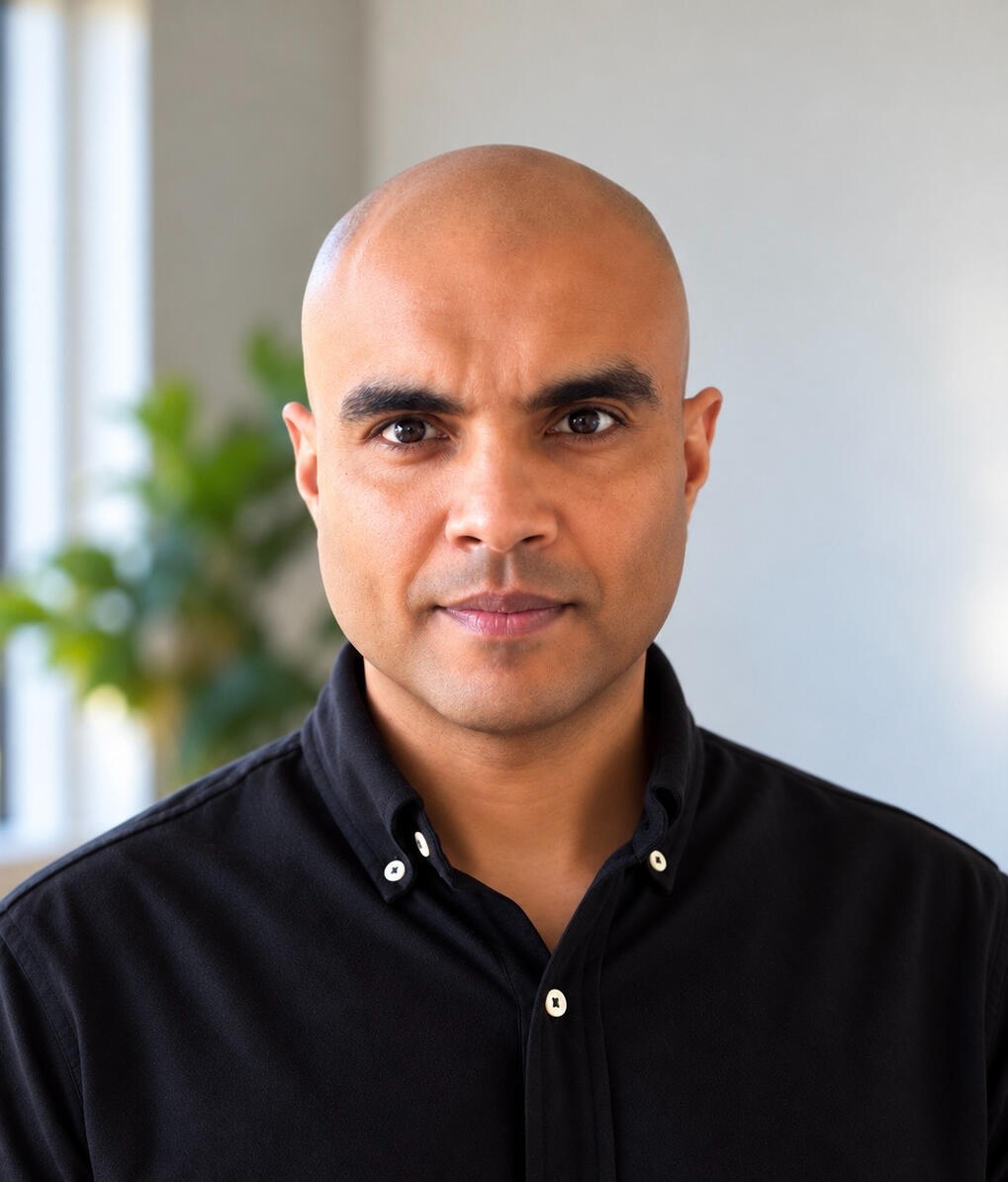
Christopher Dines is the founder of both IGITRO and Mindfulness Burnout Prevention (MBP). He is an executive consultant and coach serving high-performance individuals, a published author, and has a background in DJing and music production.He has published nine books on personal development, mindfulness and addiction, including The Kindness Habit, which he co-authored with Dr. Barbara Mariposa, a distinguished medical doctor. His book Super Self-Care received an endorsement from Eileen Rockefeller, an author and venture philanthropist. Christopher’s books have featured forewords by renowned figures such as Rudolph E. Tanzi, PhD, of Harvard Medical School, and the late John Bradshaw, #1 New York Times bestselling author, at The Meadows, Arizona.
Membership
£100 per month. You may cancel anytime, no pressure, stress free.We also offer an annual subscription for £1,100, saving you £100.When you join the MBP Circle WhatsApp group, you will have full access from that point onwards, regardless of where you are. The Zoom/Teams coaching call will take place every month. There will be weekly connections and reflections within the group, which you can engage with at your own pace. You will be able to ease into the space in a way that works for you.For further assistance email: [email protected].
Billed Monthly
Billed Annually (save £100)
Community Terms & Conditions
1. OverviewThis community is a professional space designed to support therapists and psychologists in relation to wellbeing, burnout prevention, and reflective practice.By joining the community, you agree to engage respectfully and in accordance with these terms.2. Membership & FeesMembership is offered on a subscription basis at the stated monthly rate.Payment is taken in advance and will renew automatically unless cancelled.You may cancel your membership at any time. Access will continue until the end of the current billing period.3. Nature of the CommunityThis community provides:• Peer support
• Reflective discussion
• Educational contentIt does not provide therapy, clinical supervision, or medical advice. Members remain responsible for their own professional practice and personal wellbeing.4. Professional ConductMembers are expected to:• Engage respectfully with others
• Maintain appropriate professional boundaries
• Communicate in a considerate and non-judgemental mannerThe following are not permitted:• Abusive or discriminatory language
• Harassment or intimidation
• Promotion of unrelated services without permission
• Membership may be suspended or terminated if these standards are not upheld.5. ConfidentialityMembers are expected to respect the confidentiality of others.Any personal or professional information shared within the community must not be disclosed outside of the group.Please avoid sharing identifiable client information at all times.6. Group Sessions / EventsIf group sessions (e.g. Zoom, Google Teams calls) are included:These are intended as reflective spaces, not therapy or supervisionParticipation is voluntaryMembers are responsible for attending from a suitable, private environment7. Cancellations & RefundsMembership fees are non-refundable once a billing period has commenced.You may cancel your subscription at any time to prevent future charges.8. Intellectual PropertyAll materials shared within the community (including recordings, written content, and resources) remain the intellectual property of Christopher Dines, unless otherwise stated.These materials may not be copied, distributed, or reproduced without permission.9. LiabilityWhile every effort is made to provide a supportive and professional environment, participation in the community is at your own discretion.Christopher Dines is not liable for:• Decisions made by members
• Outcomes resulting from participation
• Interactions between members10. Changes to the CommunityThe structure, content, and availability of the community may evolve over time.Reasonable notice will be given of any significant changes.11. AcceptanceBy joining the community, you confirm that you have read and agree to these terms.This is a reflective and professional space for therapists and psychologists. The intention is to support wellbeing through thoughtful discussion, shared experience, coaching, and mindful practice.For more information, email: [email protected].
© Mindfulness Burnout Prevention (MBP). All rights reserved 2015-2026.
[email protected]
Est. 2015
Insights
Essentially, mindfulness means having
a deeper awareness of what is
MBP Webinar: The Three Dimensions of Burnout
Published in October 2026
Are you currently navigating the emotional demands of your professional work? Burnout can develop gradually, making the warning signs difficult to recognise.Join me for a complimentary webinar exploring the three dimensions of burnout and ways to support your personal and professional wellbeing.MBP Webinar for Therapists & Psychologists
Wednesday 4 November 2026
1:00–2:00 pm GMT
Online via Microsoft Teams
No charge to attendRegister here: hereI look forward to welcoming you.All the best,
ChristopherFounder, Mindfulness Burnout Prevention (MBP)
Many thanks, Meriel Stanton
Published in July 2026
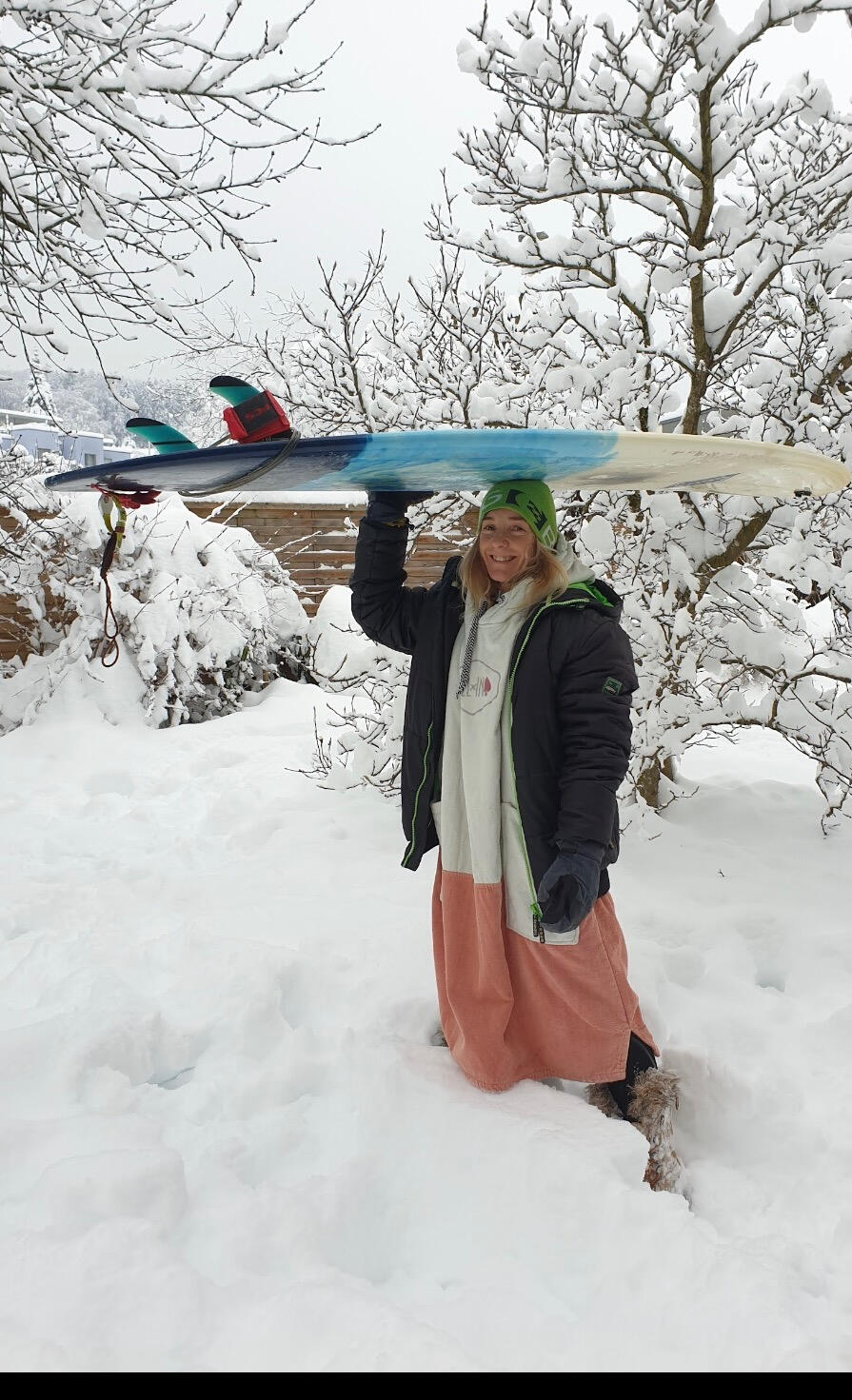
I would like to express my heartfelt gratitude to Meriel Stanton, an accomplished and highly experienced registered and licensed psychologist, certified sensorimotor psychotherapist, dance movement psychotherapist, and psychological counsellor who lives and works in Switzerland.Meriel kindly wrote the foreword to the second edition of Mindfulness Burnout Prevention (MBP), which was published on Kindle in June 2026, with the workbook paperback due to follow in the autumn.Meriel and I first connected on LinkedIn a few years ago. After reading several of her insightful posts and having recently moved into a more spacious therapy room, I reached out to her. That initial connection led to several conversations and, ultimately, to her graciously agreeing to write the foreword.Within moments of our first video call, I recognised how intellectually sharp and perceptive she was. However, what struck me even more was the way she wore that expertise so lightly, combining it with warmth, humility, and a genuine curiosity about me and what I was hoping to achieve.As I have come to know Meriel, I have been moved by her commitment to serving those in need of mental and emotional support, regardless of their circumstances. Equally impressive is her willingness to share her own experience of recovering from burnout in the late 2010s with fellow psychologists and therapists, whether they are early in their careers or highly experienced. It is a testament to her generosity and commitment to the greater good.Meriel understands that those who support others and sustain our mental health services, particularly those working directly with the public, are not immune to burnout. They, too, need support, understanding, and a community in which they can flourish.To learn more about Meriel’s private practice and her work, please visit here.Many thanks, Meriel Stanton.Warmest regards,
Christopher Dines
Thank you, Dr Bernice Sant

Published in June 2026
I first met Dr Bernice Sant on a bright and sunny weekday afternoon in the heart of Valletta, the beautiful capital of Malta, sitting outside a tranquil café in the summer of 2023. We had exchanged emails a year or so beforehand regarding her work and the possibility of facilitating retreats in southern Europe.I was immediately struck by her presence when we met, composed, calm, and highly professional. Fortunately, she would later agree to write the new introduction to the second edition of Mindfulness Burnout Prevention (MBP), while also exploring ways for us to lead events for high-performance psychologists and therapists together.What made this connection particularly meaningful was that I myself had been visiting Malta since 1997, one of my favourite places on earth (I even DJ’ed there in 2004 in what feels like a different life entirely). I had been hoping to collaborate with an accomplished psychologist. Then Bernice appeared.Dr Sant is a qualified performance, sport, and exercise psychologist, as well as a keen fitness and sports enthusiast. She obtained her Doctorate in Sport & Exercise Psychology, is a Chartered Member of the British Psychological Society, registered with the Health and Care Professions Council UK, and warranted by the Malta Psychology Profession Board (MPPB) to which now she is a member of.Currently, she is a Post-Doctoral Researcher within the Department of Artificial Intelligence at the University of Malta, where she is leading the development of an AI-driven mental wellbeing application. She is also a member of Malta’s Government Youth Advisory Forum, serves as an External Expert Evaluator for Erasmus+ Sport Projects on behalf of the European Commission, and lectures and supervises across several educational institutions, including the University of Malta, the Malta College of Arts, Science and Technology (MCAST), the Institute for Education, and the Mariano Farrugia Academy.In addition, she works as a sport psychology consultant with both the Malta Olympic Committee and the Malta Football Association, supporting athletes, clients, and organisations in optimising wellbeing, performance, and personal development across a variety of high-performance settings and life stages.Dr Sant has played a significant role as a mentor to both athletes and those entering the field of psychology within the Mediterranean, while also positively impacting professionals in the United Kingdom, including at Liverpool Football Club and Liverpool John Moores University scholarship athletes.And while her professional achievements are impressive, her determination to overcome personal challenges deserves equal recognition. At one point, due to a prolonged injury, one that has ended careers for others, she had to rely on support simply to relearn how to walk, let alone train again. It was during this period that deeper levels of humility, resilience, and character were harnessed, refined, and integrated into both her philosophy and professional practice.To learn more about her work visit here.Thank you, Dr Bernice Sant!Warm wishes,
Christopher Dines
Mindfulness Burnout Prevention (MBP)
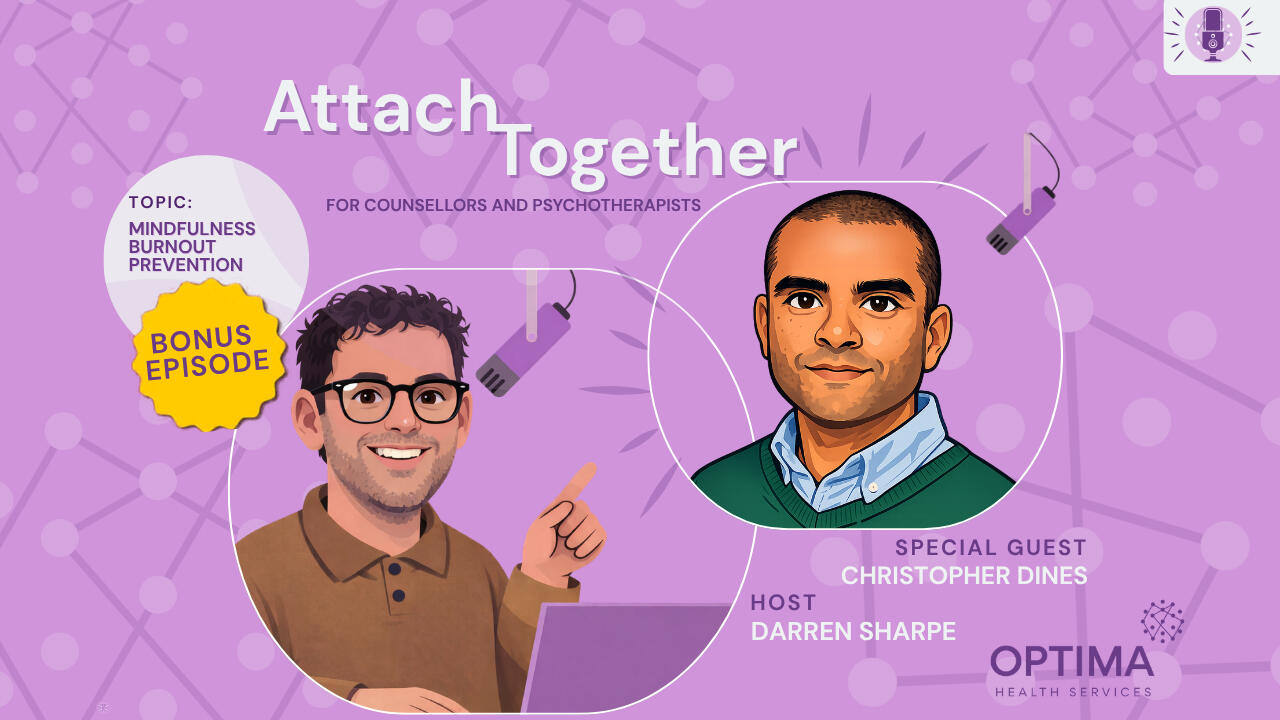
featured in Optima Health Podcast
Published in May 2026
I was delighted to join Optima Health Attached Together Podcast this month discussing MBP and how it relates to both therapists and psychologists. We explored preventative measures that can be taken in the early stages of exhaustion, before burnout occurs.Many thanks to attachment-based psychotherapists, Jo Oxley, and Darren Sharpe, for the invitation. Optima Health offers courses, retreats, therapy, and supervision, drawing on a breadth of experience. They offer Level 5 (CPCAB) and Level 7 (CPCAB) training for therapists seeking to advance their skills.Visit here to listen now.All the best,
Christopher Dines
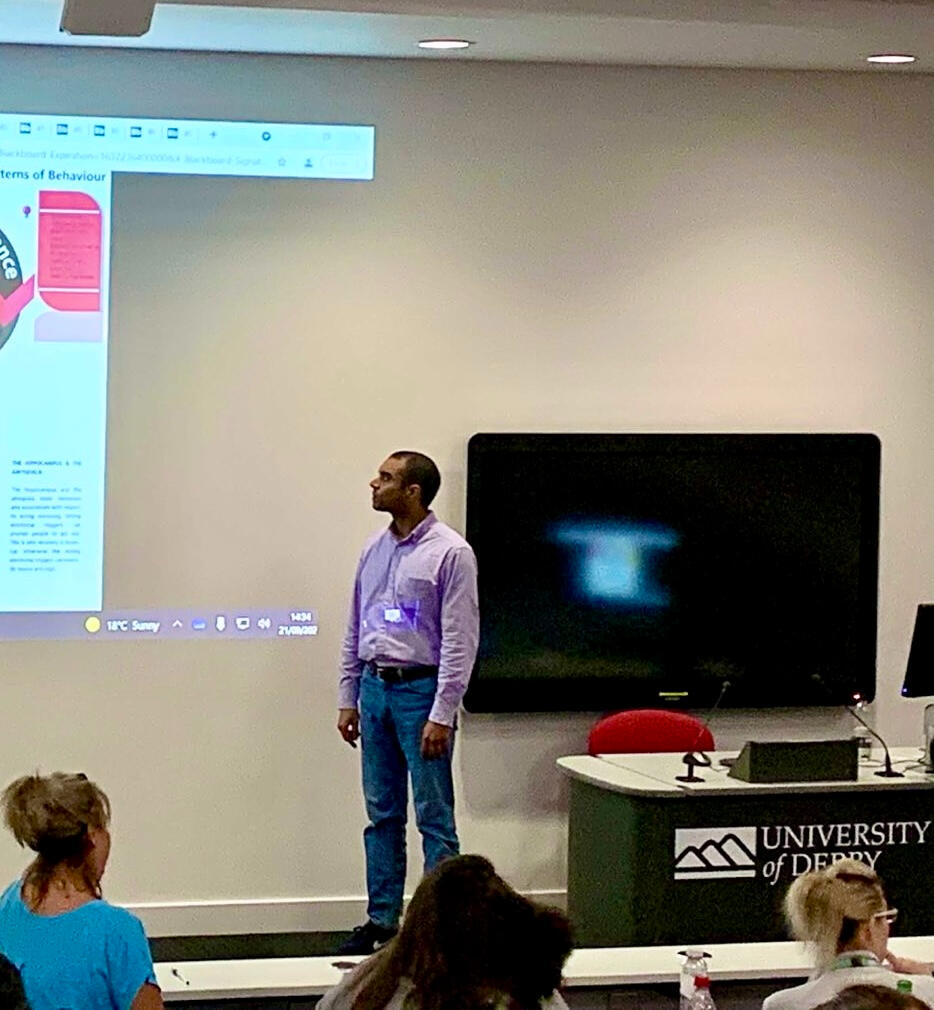
MBP at University of Derby (UoD)
Published in April 2026
It’s been a privilege to contribute in this capacity since 2019 as a guest lecturer at the University of Derby, speaking on Mindfulness Burnout Prevention (MBP) and emotional resilience within the Health and Social Care Faculty. Last month’s session was a particularly enjoyable experience.I’d like to personally thank Tonimarie Benaton, for whom I have enormous respect, for taking a risk and believing in MBP with her undergraduates over the years. Her work at the University of Derby, and her experience in social care, are very impressive, and we wish her all the best with her PhD.Burnout remains widespread among NHS staff, with psychological professionals particularly at risk. Those working across psychology, therapy, and social care—for example, an accredited psychotherapist who is also a qualified social worker, or a psychologist working in social care—need to be especially conscious of how they navigate the everyday pressures of their work.This is why we believe at MBP in equipping undergraduates, whether in psychology, social care, or both, with the right information and, perhaps more importantly, practical tools to prepare them for what can be a fulfilling yet emotionally demanding career.Mindfulness won’t solve all psychological or emotional challenges, but it can certainly help, particularly in preventing burnout. There are hundreds of studies conducted by universities worldwide, with new research emerging regularly, showing how mindfulness can reduce stress, anxiety, and depression, while supporting grounded presence and calm over time. Developing awareness of one’s triggers, bodily sensations, thoughts, and feelings can also support a more sustainable lifestyle.Warm regards,
Christopher Dines
Clarity Precedes Progress
Published in January 2026
Happy New Year! I hope you had some time to rest and rejuvenate over the winter break. January often becomes a moment for setting new intentions, refining aspects of one’s lifestyle, or in some cases, making more significant changes.In the coming months, I’ll continue to share the personal experiences of therapists and psychologists around burnout prevention and self-care. We had some excellent contributors last year, and I’m keen to keep this dialogue alive.One pattern I’ve observed among clinicians working in mental health, since the first publication of Mindfulness Burnout Prevention (MBP) in 2015, and even earlier during my time working in clinics and organisations, is the tendency to over-adapt to environments that are unsustainable. While adaptability can be a strength, there are moments when it’s essential to pause and honestly assess whether continued compromise is worth the cost.Personally, I experienced burnout twice within four years while working in the electronic music industry until the mid-2000s. Later, during and after the Covid-19 period—once the heightened adrenaline of lockdowns had passed—I had to take self-care very seriously. Over-adapting, I’ve learned, can quietly erode well-being over time.On this theme, a remarkable human being and accomplished psychologist and psychotherapist based in Switzerland, Meriel Stanton, recently shared her reflections in the second foreword to the upcoming second edition of Mindfulness Burnout Prevention (MBP), scheduled for publication later this year (more on that soon). Many skilled psychologists and therapists echo this experience—recognising, often in hindsight, that excessive compromise in both professional and personal life came at a significant cost, often requiring months to recover from burnout.At a recent New Year family gathering, I was asked what my intention for the year might be. My answer was simple: clarity. What comes to mind when you reflect on your intention for 2026?Have a good day, and a tranquil month ahead.All the best,
Christopher Dines
Therapist Mark Hambrook Retires
— MBP Salutes You

Published in October 2025
Mark Hambrook, a seasoned therapist and former head of a dual diagnosis service operating in East Anglia, England, has retired. It’s difficult to measure the positive impact he’s had on the hundreds of people he’s helped — through one-to-one work, workshops, and his dual-diagnosis initiatives. Over the years, Mark consulted with organisations including Norcas, Probation Services, CRI, Open Road, Stonham, and St Giles, always bringing a deep understanding of addiction and recovery.I first met Mark while running a mindfulness meditation support group in Suffolk, England, back in 2010. I was immediately struck by his empathy, humility, and genuine commitment to mindfulness-based approaches. We soon developed a mutual respect and went on to co-facilitate mindfulness workshops in both Suffolk and Covent Garden, London, for mental health professionals and the general public alike.Kindness, compassion, and empathy were constants in Mark’s private practice and community work. In hindsight, I can smile at moments when my younger self might have been a little brash — but Mark always met that energy with a glint of good humour in his eye.When I founded Mindfulness Burnout Prevention (MBP) in 2015, he was again generous with his time, offering thoughtful feedback drawn from both his clinical expertise and his personal mindfulness practice.Wishing Mark a joyful and serene retirement in the Philippines, and sincere gratitude for his years of service and care.All the best,
Christopher DinesP.S. I've included a video of Mark and me at ECR, Suffolk, in 2013. It was an excellent workshop.
Sustaining Calm and Enjoying Serenity
Published in September 2025
Therapists and psychologists committed to preventing burnout often engage in regular supervision, sometimes monthly or more, and connect with peers for mutual support. These practices not only benefit the professionals themselves but also improve outcomes for their clients. Sustaining boundaries, such as avoiding weekend work and seeking natural ways to feel calm and serene, is a sign of strength.Unfortunately, burnout remains a persistent issue among otherwise brilliant and accomplished therapists and psychologists. Certain professionals are at higher risk: for example, eating disorder psychotherapists and clinicians working full-time with substance misusers often face intense, emotionally taxing caseloads. Younger or newer trauma therapists, eager to prove themselves, may also take on gruelling workloads that jeopardise their own health, sometimes leading to early career exit.The good news is that burnout is preventable. It requires a structured support system, including supervision, specialised coaching, and peer group support. Prevention also demands deliberate action and clarity to identify pressure points in both professional and personal life. Mindfulness is particularly effective: it promotes clarity, self-awareness, neural connectivity, and helps reset the nervous system. As reported in the Journal of Occupational and Environmental Medicine, a randomised clinical trial demonstrated that “practice of mindfulness meditation results in a decreased response to stress, and mindfulness-based interventions have been effective at reducing workplace stress and burnout.”A practical tool for cultivating a mindful, deliberate lifestyle is to regularly check in with yourself throughout the day. Ground yourself in the present by taking a long, deep breath, ensuring that your exhale is longer than your inhale. For added benefit, place both feet firmly on the ground while breathing. These simple practices help reset the nervous system and create moments of calm and serenity. Professionals who integrate mindfulness into their personal routines tend to experience more frequent calm, as mindfulness positively influences brain function. The more attention given to the breath, the stronger the prefrontal cortex becomes, supporting higher-order mental functions.A 2024 case study titled Neurobiological Changes Induced by Mindfulness and Meditation: A Systematic Review, published by the National Library of Medicine, highlights the neurobiological benefits of mindfulness: “Their study emphasized the interplay between gene expression pathways activated in stress responses, with an observed increase in neural activity in regions associated with emotional regulation. Bakshi and Srivastava (2024) explained the neurobiological understanding of yoga and mindfulness, and their effects on neuronal function, stress, and well-being. Their review showed that the impact of mindfulness and yoga on the brain areas responsible for regulating stress, emotional control, and cognitive processes is positive. Specifically, function is enhanced in areas such as the prefrontal cortex and amygdala, which substantiate emotional resilience and improve cognitive control.”By integrating mindfulness into your daily routine, sustaining calm and enjoying serenity is possible.All the best,
Christopher Dines
MBP 10-Year Anniversary (First Edition)
— Published in July 2015

Published in July 2025
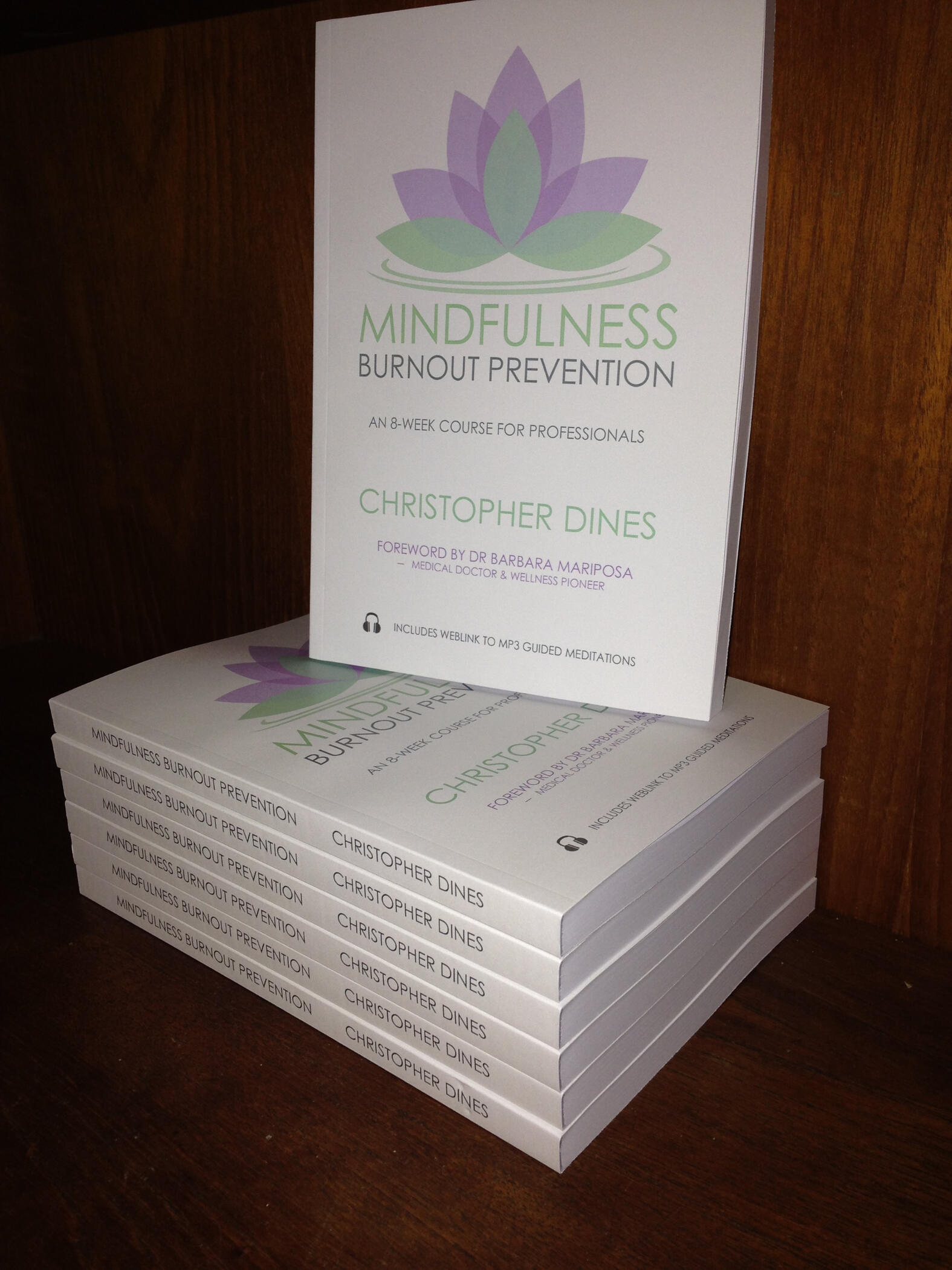
It’s the 10-year anniversary of Mindfulness Burnout Prevention (MBP), which was published in July 2015. At the time of writing the manuscript, many health professionals were warning that exhaustion, burnout, and mental illness would become endemic in many Western countries by 2020, including medical doctor and author Dr. Barbara Mariposa, who wrote the foreword to Mindfulness Burnout Prevention (MBP). However, none of us could have foreseen Covid-19 and its grave impact in the years that followed. During the pandemic, both in the UK and globally, people were under incredible stress, and exhaustion became widespread, continuing into the post-Covid years.As a mindfulness coach and practitioner, I witnessed firsthand how both therapists and psychologists were deeply affected during the Covid-19 era and beyond, with a noticeable increase in reports of burnout. I, myself, struggled to navigate the post-Covid landscape, especially after the adrenalised period had passed.That’s why I’m delighted to announce that to mark the 10-year anniversary of Mindfulness Burnout Prevention (MBP), I’m currently writing the second edition, specifically for therapists and psychologists who are at risk of burnout and emotional exhaustion, helping them cultivate resilience and experience greater clarity. This updated edition will feature a new foreword by Meriel Stanton, an accomplished psychologist and psychotherapist, as well as a new introduction by Dr Bernice Sant, an experienced peak performance psychologist. The foreword to the first edition, written by medical doctor and wellness pioneer, Dr Barbara Mariposa, will also be included in the second edition.I’d like to thank everyone who has supported my work, research, and services over the years.All the best,
Christopher Dines

Burnout Among Psychologists & Therapists
Published in June 2025
Being a therapist and/or psychologist can be life-changing for your clients. Whether you’re helping someone work through trauma, supporting a person with an addictive behaviour, or guiding a couple as they repair their marriage, the impact of your work is immense. There’s a deep sense of fulfilment when a client experiences a breakthrough, knowing you’ve played a role in their healing process. And as your experience grows, so does demand for your services (some clients will pay whatever you ask just to keep working with you).Balancing empathy with professional boundaries is a skill, one that’s far from easy, but the fact that you can do it leaves a lasting impression. Most clients respect and appreciate the boundaries set in therapy, even if they come in with high emotional demands.The challenge comes when burnout starts creeping in. While supervision with an experienced colleague serves an essential role, offering guidance and providing distance from the emotional weight of client work, many therapists will still experience exhaustion and burnout at some point in their careers. Some areas of psychology and therapy are particularly intense; for example, a therapist working in a private drug and alcohol rehabilitation clinic might burn out within two to three years because of the relentless nature of the environment. Even therapists in private practice, working from beautiful, spacious settings, aren’t immune to burnout.By the time a therapist and/or psychologist reaches the point of compassion fatigue and exhaustion—where the passion for the work starts to fade despite having built a dream career—it’s often a sign that burnout has set in. And without meaningful lifestyle changes, recovery can take up to a year (sometimes 16-18 months).So how do you prevent burnout? And how do you sustain a sense of enjoyment in your work? It may sound obvious, but prioritising self-care is essential. Regular, intentional rest—downtime with minimal activity—can make all the difference. This could mean reducing your client load, scheduling daily naps, or carving out non-negotiable time off. Travel, holidays, trips, and even short breaks from therapeutic conversations can help reset the mind and body.Incorporating mindfulness practices, whether meditation, breathwork like box breathing, or yoga techniques can reduce stress and build resilience. The key is self-awareness: tuning into your thoughts and emotions, listening to what your body is telling you, and, most importantly, respecting those signals.The good news is that burnout isn’t inevitable. And for those already recovering from burnout, sometimes a few small, deliberate adjustments—pulling a different lever here and there—can be enough to cultivate a more sustainable, tranquil life as a therapist or psychologists. Therapy and psychology are needed now more than ever. It’s a profound service with lasting effects.All the best,
Christopher Dines
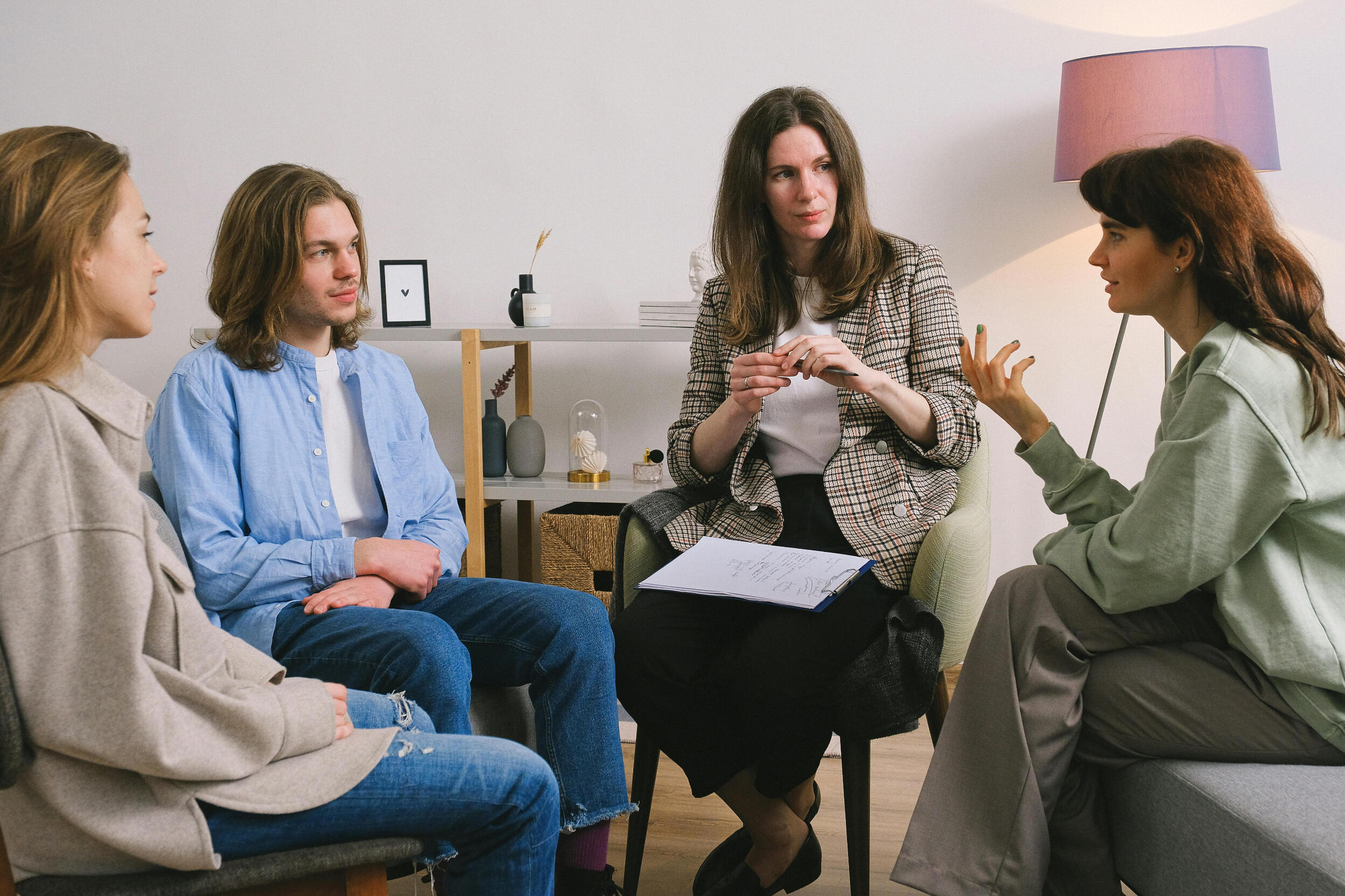
Therapy and Psychology are Life-Changing
Published in April 2025
The work of therapists and psychologists is life-changing—especially in an increasingly uncertain and tumultuous world. As mental illness, trauma, and emotional distress continue to rise, the need for skilled therapists and psychologists has never been more vital. The impact of good therapy and psychology is truly life-changing.I’ve personally experienced the profound benefits of therapy and psychology—whether through talking therapy, EMDR, or deep feeling (inner child) work. Each approach has offered healing, relief, and much-needed closure. The strength and dedication it takes for an exceptional therapist or psychologist to hold space, listen deeply, mirror, guide, and respond with care are truly remarkable.I’ve spoken with dozens of people whose relationships and overall well-being have improved because of therapy or psychology. That’s why I believe it’s essential to create more spaces where therapists and psychologists can receive the same level of support they provide to others.A simple yet powerful practice for therapists and psychologists is to observe the natural flow of the breath throughout the day. Every hour, take a moment to ask yourself, “What’s my breathing like?” Then gently focus on its rhythm for a minute or so. This small act of mindfulness can anchor you in the present and create a sense of calm amidst the challenges of the day.All the best,
Christopher Dines

Mindfulness Burnout Prevention (First Edition) featured in the HuffPost UK back in 2016
Published in March 2025
According to the World Health Organisation (WHO) deteriorating mental health will represent one of the most serious health challenges to Western society of the twenty-first century. The WHO report states, "In the World Health Report 2001 that we devote to mental health, we bring updated figures which show that four of the ten leading causes of disability worldwide are neuropsychiatric disorders, accounting for 30.8% of total disability and 12.3% of the total burden of disease. This latter figure is expected to rise to 15% by the year 2020."Similarly, Dr Barbara Mariposa refers to this report in her blog, "Stress, anxiety and depression are predicted to be the second biggest causes of ill health in Western countries by 2020."Overwhelming stress, anxiety and the effects of depression are taking their toll on people from all walks of life. All of us can "burn out" regardless of social or economic status but there is no doubt that financial concerns can place enormous additional strain on those already struggling to juggle the day-to-day pressures of everyday modern life.High achievers are not immune from professional burnout either. The founder of The Huffington Post, Arianna Huffington changed her lifestyle after a rude awakening. She suffered from burnout and exhaustion, "When I collapsed in April 2007, I was by our society's definition very successful, but by any sane definition of success, I was not ... As long as our culture defines success as money and power, we're stuck on a treadmill of stress, sleep deprivation, and burnout."Stress, anxiety and mild depression (also substance misuse) have in the past been very problematic for me. As a matter of fact, in summer 2004 I burnt out while DJing, which left me no choice but to seek help and change my lifestyle completely. It was a huge wake up call -- I had hit a dark rock bottom. While I have improved dramatically in the last twelve years, I am certainly not immune to stress and anxiety and I can still succumb to feelings of despondency from time to time. Nonetheless, I have found several invaluable tools which help me to take care of myself and reduce the risk of burnout re-occurring. Practising mindfulness in all areas of my life has been the most wonderful investment I have ever made into my mental, physical, spiritual and emotional well-being.Below are eight gentle suggestions which I put together in an eight-week course format, inspired by my book, Mindfulness Burnout Prevention: An 8-Week Course for Professionals. They are well worth exploring:• Present-Moment Awareness, Equanimity and Calmness-- Focusing on the present moment brings clarity with regard to our thought-life, emotional state, behaviour and immediate environment. Such clarity will reveal when we are neglecting our wellbeing. The more we practise present-moment awareness, the easier it is to see how futile it is to be attached to an outcome. We can begin to flow and demonstrate equanimity during life's vicissitudes. There are many different ways to practise present-moment awareness, however the simplest way is to get into the habit of watching the breath. Throughout the day pause on a regular basis and observe the breath flowing through your body. This is a good start.• Communicating Mindfully-- When I burnt out I was in a mild state of self-delusion. I thought that "I was fine" even though my body was giving me clear signals that I was exhausted. I pretended to be "super human", and so, I was being dishonest with myself and my fellows. Had I been able to communicate mindfully how I was truly feeling, I would have been able to slow down before it was too late. It's worth learning how to be honest with yourself and others by communicating with clarity. Ask yourself, "How am I really feeling?" "Am I mentally and/or emotionally overwhelmed?" "How often do I feel resentful towards my current circumstances?" "Am I dissatisfied or frustrated in my job/career?" "When was the last time I ate healthily or rested my body?" "How often do I take gentleness breaks?" "Am I communicating mindfully with my colleagues and family?"• Focus, Alertness and Concentration-- A lack of focus, alertness and concentration show that we are not anchoring ourselves in the present moment. Naturally, this will increase the likelihood of making mistakes and being less effective. Being able to focus on the task at hand releases stress and can be very fulfilling, even if it is something relatively mundane or "unimportant". Similarly being alert and aware of our mental commentary helps us to detach from mental noise and destructive thoughts. Note: being alert is very different from being "hyper-vigilant". The latter is emotionally draining and usually a symptom of PTSD or unresolved childhood trauma. Being alert is a calming emotional state and goes hand-in-hand with a dedicated daily mindfulness practice.• Mindfulness and Emotional Intelligence-- Mindfulness is a wonderful way to practise "being" instead of compulsively "doing". Mindfulness is consciously being aware of our thoughts, feelings, emotions and sensations and being aware of the external world with clarity. Practising mindfulness on a daily basis will boost mental and emotional wellbeing and lessen the impact of stress, anxiety and depression. It can also enhance our spiritual wellbeing. We can be mindful of our lifestyle and the company we keep. Rather than being on auto-pilot, we can pause and respond to events rather than reacting and being thrown off course by the slightest problem.Similarly, emotional intelligence helps us to monitor our emotions. We can feel our feelings (pain, sadness, fear, sorrow or joy), without being overwhelmed by them. We can learn to recognise that while it's important to validate our feelings, we are not our emotions (we have feelings but we are not our feelings).• Emotional Resilience-- Life is difficult. Building a successful career in a global economy is a tall order. Bringing up a family also brings many challenges. However, when we develop emotional resilience we can persist and progress in our affairs. Rather than trying to force our way through life (which is counterproductive and leads to grave resentment) it is much healthier to focus on our efforts instead of potential outcomes. The fruit is in our efforts. It's the process that makes life fulfilling, not just a result. Remember that there are over seven billion people who also have personal desires, thus no matter how hard you try to push, resistance will be close by. The next time you find yourself trying to force your way through life, breathe and emotionally let go.• Body Scan Awareness and Meditation Practices for StressBeing aware of the condition of our body is essential. If we can listen to the human body and be aware of its needs, we will reduce stress. We know that memories are stored inside the muscles of the human body (traumatic or joyful memories). The human body remembers everything. Similarly, the human body informs us through feelings, aches and sensations when it needs to be nurtured or requires time to rest. By scanning the body with various meditation techniques we can boost our emotional wellbeing and reduce stress. Ask yourself "How is my body feeling in this very moment?" "How often do I pay attention to my body?" "Do I give my body regular exercise?" "How often do I allow myself downtime?"• Self-CompassionLearning to direct compassion inwards is probably the kindest thing that we can do for ourselves. It's so easy to direct blame towards ourselves. When we are kind and compassionate towards ourselves, self-care becomes natural. If we nurture and take care of our mental, emotional, spiritual and physical wellbeing, we are far less likely to burn out. It was Jack Kornfield who said, "If your compassion does not include yourself, it is incomplete." Therefore, ask yourself on a regular basis, "Am I directing compassion inwards?" "Do I put enough time aside to relax and unwind?" "Am I allowing myself to believe cruel things about myself?" "What can I do right now to be more compassionate and loving towards myself?"• Cultivating Gratitude and Appreciation in the WorkplaceRegularly reminding ourselves about things we cherish and appreciate will shield us from adopting a negative frame of mind. While we cannot be appreciative all of the time, we can pause once a day and reflect on the things we can be grateful for rather than focussing on what is "missing". Writing in a gratitude journal can be very helpful or talking to your spouse/partner or a friend about your thankfulness will amplify your emotional health.To read the full article visit HuffPost UK
© Mindfulness Burnout Prevention (MBP). All rights reserved 2015-2026.
[email protected]
Est. 2015
MBP Newsletter Archive
Remember to notice that you're breathing.
Published in October 2026
MBP newsletter featuring with GP,
Dr Patrice Queenan
This month, we’ve done something a little different. We usually send you monthly guest interviews with psychologists and therapists who generously share their experiences of practising self-care in both their personal and professional lives. We really enjoy bringing these conversations to you, alongside the articles we regularly publish on our homepage.With that in mind, we recently had the pleasure of speaking with GP Dr Patrice Queenan about how she looks after herself, both personally and professionally.Dr Queenan said: “Thanks for asking me to contribute to this piece. I’m Irish, but a UK trained doctor. I’m working as a GP in Ireland now and am undertaking a Certificate in Lifestyle Medicine. I’m passionate about self-care, good work-life balance, and looking after my colleagues! For myself - how do I practice self-care? My phrase for stress is ‘control what you can control.’”“As life is challenging and stressful at times we cannot avoid stress totally. I have some agency over sleep hygiene - I’ve a pretty good routine bed and wake time. Sleep is vital. I pray and meditate when I wake up. I find works by Dr Joe Dispenza, Louise Hay, really impactful - expecting good, trying to ‘train’ our subconscious/unconscious and make it our friend.”“I exercise daily. I’m a different person post exercise. Finding an exercise you love is vital. I eat really well and enjoy my food. I still love coffee. I don’t drink alcohol nor smoke.”“Awareness is key in all of this for me - in a stressful day - being aware of the situation, how I feel, then self-regulating. I adore the Insight Timer app and recommend it frequently. Breathwork is a great ‘quick fix’ for nervous system regulation and getting back into the body.”Dr Queenan concluded: “Connection is vital too - our hearts and souls - and to connect with maybe a small but precious group of beautiful souls always regulates me and enriches my life. Sending good wishes to you as you read this and wishing the best for your day.”Wishing you a serene weekend.Christopher DinesFounder of MBP | Published AuthorP.S. Claim your complimentary guided presence meditation audio here.P.P.S. In case you missed our last newsletter featuring counsellor and psychotherapist, Niamh O’Neill, you can now read it here.

MBP newsletter featuring counsellor and psychotherapist, Niamh O’Neill
Published in September 2026
I had the pleasure of connecting with counsellor and psychotherapist Niamh O’Neill, who has a private practice in County Cork, Ireland. We spoke about how she incorporates mindfulness into her life and what mindfulness means to her.As she so eloquently describes, mindfulness brings clarity, which gives her the opportunity to make helpful choices with discernment, moment by moment.Niamh said: “Mindfulness for me encompasses and encapsulates a deepened self-care practice. Vitalising intentional living, nurturing an alignment of noticing and accepting with self-compassion, including choice, response, action and being.”“Mindful living can be considered a daily practice of continually coming back to conscious awareness, sitting in a seat of fertile being mode, widening capacity and depth of experiencing.”She then shared how essential it is to notice her habitual actions, her “doing” mode: “Doing mode, although necessary, in communicating with one’s nervous system for adequate response and healing, also has the ability to contribute to outdated habits of thinking and doing, reinforcing a constricted trauma response that can create a sense of repression and lack of ease within. Sometimes the aim of mindfulness is not to be calm but rather responsive, navigating zones of tolerance which can be affected by previous experiences of trauma or chronic stress.”She then referred to a quote by Sharon Salzberg, which personally reminds her to observe the mental monologues and stories in her mind: “Mindfulness helps us get better at seeing the difference between what is happening and the stories we tell ourselves about what’s happening.”Niamh reflected and concluded: “Being fully alive can be considered an acceptance and understanding of experience, thought, sensation and feeling in what it means to be human, embracing the personal relativeness and relational contact of experiencing in engagement with daily life. A continuous experience of active open attention to the present moment without judgement.”She continued: “Within my lived experience, which is nuanced and complex, where figural presentations in daily life have the capacity to hold multiple layers of experiencing and memory, mindfulness becomes a nurturing of simplicity with clarity and a reconsolidated task with a sense of restoration, choice, healing, freedom and growth, encompassing engagement and response. Multiple characteristics of doing and being mode exist; mindfulness and mindful living can create greater conscious presence as opposed to automated living.”Wishing you a great start to the month.All the very best,
Christopher DinesFounder of MBP | Published AuthorP.S. In case you missed my last newsletter featuring California-based marriage and family therapist Luis Maimoni, you can now read it here.
MBP newsletter featuring marriage
and family therapist, Luis Maimoni
Published in August 2026
I recently connected with Luis Maimoni, an experienced Licensed Marriage and Family Therapist based in Long Beach, California, to discuss the challenges of working within an institution before building a thriving private practice. We also explored how he has cultivated mindfulness in every area of his life—not simply as a technique, but in its truest sense of clarity, awareness, and presence.He generously and candidly shared the following: “Back in graduate school they reminded us that we’d need to practice self-care. Unfortunately for me, self-care was never my thing. When they told me to “find what works for me,” I didn’t know—or honestly care—what that meant. I wasn’t there for me. I was there for the clients.”“Make space. Provide containment. Help someone feel seen. Leave each person better than when they walked in. No excuses.”“The strategy worked as long as I was sitting with a client. Documentation was another story. Suddenly I had no energy and no confidence. I was convinced everything I wrote would somehow be wrong—and not just wrong, stupidly wrong. Every note felt like it drained the last bit of energy I had. The road to burnout is paved, I believe, with documentation.”“I adapted by taking on fewer cases than management wanted me to carry. It helped. Not because I was seeing fewer clients, but because I had enough energy left to do the documentation. My supervisors weren’t thrilled, and eventually I realized I needed a different environment.”“Private practice solved many of those problems. I had more control over my schedule, my documentation, and the pace of my day. Ironically, that freedom created a new challenge. The more clients I saw, the more successful the practice became. Financially, it was wonderful. Personally, I eventually realized I wasn’t being the husband or father I wanted to be.”He continued: “Mindfulness wasn’t something I ever imagined would help me, but I was out of other ideas. I started looking hard at mindfulness and how to apply it during sessions. Over time, I’ve learned to practice mindfulness during sessions by imagining an observing part of myself, quietly looking in. How’s my breathing? What am I feeling? Where am I feeling it? Am I tense? Am I distracted? Am I getting frustrated? Am I bored? Do I need to slow down?”“That awareness helps me recognize my countertransference in real time. If I’m exhausted in session, maybe we’re caught in an anxious loop. If I’m irritable, I can ask what’s been triggered. If I’m bored or distracted, maybe the client is avoiding something that needs to be said. Mindfulness doesn’t solve those problems. It simply helps me see them before they become bigger ones.”“Mindfulness made me a better therapist long before it made me better at taking care of myself. For years my burnout strategy was simple: reduce my caseload, sleep in when I could, and enjoy some fine wine. It worked well enough to keep me practicing the profession I love, but if you’re a therapist reading this, you know it wasn’t really self-care. It was recovery.”“My experience with mindfulness in the therapy room convinced me it could work outside the room as well, but I couldn’t get it to stick. My mind drifted. I’d get frustrated.”Luis then reflected on the challenges he faced in recognising and working through the mental blocks that had been getting in the way of his mindfulness practice: “‘Back to your breath,’ they said. Gently, and without self-criticism, come back to breath. My response wasn’t suitable for this newsletter! Like so many of my clients, I felt like mindfulness didn’t work for me.”“Then chance intervened during a visit to San Francisco’s Chinatown. I was struggling to make a singing bowl sing when the proprietress looked me in the eye and said, ‘You have to play with intention.’”“I took a deep breath, and brought all my focus to the task of running the striker around the rim of the bowl. The bowl sang.”He continued: “I’ve never forgotten that moment. It finally clicked that mindfulness isn’t something I switch on and off. It isn’t another item on my to-do list. It only works when I practice it with genuine intention.”“And that’s when I realized something else. Mindfulness wasn’t actually my self-care. It was the way I learned to notice what I needed.”Luis concluded by saying: “Sometimes what I need is less work. Sometimes it’s more sleep. Sometimes it’s time with my wife. Sometimes it’s exercise, a glass of water, or simply admitting that I’m running on fumes instead of pretending I’m fine. Mindfulness doesn’t tell me what the answer is. It tells me it’s time to ask the question.”“Burnout comes for all of us eventually. My experience has been that mindfulness doesn’t magically make it disappear. What it does is help me recognize what I need before burnout makes the decision for me.”Wishing you a calm month.Warm regards,
Christopher DinesFounder of MBP | Published AuthorP.S. In case you missed my last newsletter featuring performance, sport, and exercise psychologist, Dr Bernice Sant, you can now read it here.
MBP newsletter featuring performance, sport, and exercise psychologist, Dr Bernice Sant
Published in July 2026
A powerful question to ask yourself is, “Is my current lifestyle sustainable, or am I on a path toward burnout?” Your honest answer can help you make the changes needed to live a healthier, more sustainable lifestyle. It might be worth reflecting on this question every quarter.With that in mind, I recall meeting Dr Bernice Sant on a bright and sunny weekday afternoon in the heart of Valletta, the beautiful capital of Malta, sitting outside a tranquil café in the summer of 2023. We had exchanged emails a year or so beforehand regarding her work and the possibility of facilitating retreats in southern Europe. I was immediately struck by her presence when we met, composed, calm, and highly professional.Dr Sant is a qualified performance, sport, and exercise psychologist, as well as a keen fitness and sports enthusiast. She kindly wrote the introduction to the second edition of Mindfulness Burnout Prevention (MBP) and generously shared her insights and experiences on the importance of self-care.Bernice wrote: “In my own professional journey, I have learned that self-care is not a luxury, it is a necessity. The deeper I go into my work, the more urgent it becomes to come home to myself, again and again. What sustains me is not one magic solution but rather a tapestry of small, intentional practices that centre around mindfulness, embodiment, and authenticity.”She continued: “My compass begins with awareness, staying close to what energises me and what drains me. I practice this by integrating mindfulness and meditation into my daily life, not as tasks to tick off, but as ways of listening in. Something as simple as a 3-minute breathing space before my workday begins can help anchor me, giving me space to feel before I move. I have learned that being close to the sea has a profound calming effect on my system. I do not just visit nature, I let it recalibrate me.”Reflecting on personal growth, Bernice said: “Growth, for me, lies not in constant positivity, but in staying open to both the ease and the edge. Every experience, pleasant or painful, is an invitation to grow. So, I inject moments of stillness into my days. Sometimes this is a moment by the sea, a pause to watch the clouds, or even a short, restorative getaway. These are my “switching off” moments, and I’ve come to accept that what works for me will not work for everyone. So, I do not compare, I come back to what I feel, in this body, in this life.”Wishing you a tranquil month.All the best,
Christopher DinesFounder of MBP | Published AuthorP.S. In case you missed my last newsletter featuring psychotherapist and psychologist Meriel Stanton, you can now read it here.
MBP newsletter featuring psychologist, and psychotherapist, Meriel Stanton
Published in June 2026
Having connected with the experienced psychologist and psychotherapist Meriel Stanton, who lives and works in Switzerland, I asked her to write the foreword to the second edition of Mindfulness Burnout Prevention (MBP), which will be published on the 8th of June 2026. Her account of navigating burnout and practising self-care is moving and heartfelt, and so this month I would like to share a short excerpt with you.Before that, I gently invite you to anchor yourself in this moment and take a long, deep breath. Returning to the present moment, again and again, can help sustain clarity and reduce hazy thinking and vagueness.With regard to her experience of burnout, Meriel wrote: “When I think of burnout, the same image always rises before me: an old VW Beetle abandoned in a garden somewhere, rusty, missing a wheel or two. Strong green grass weaving through its empty chassis. Weeds curling through the wheel arches. A cat nosing at the tyres. Perhaps a bird nesting in the passenger seat. No glass where the windows once were. Nature quietly, insistently reclaiming what has been left behind.”“This image comes from an actual car I passed every day while living in Kenya. It had been abandoned under a magnificent jacaranda tree, the blossoms of which fell like violet snow onto the faded bonnet. I often wondered about the car’s story, who once drove it, what journeys had it taken? Could it ever be restored? Or had it become too fused with the landscape to move again?”She continued: “Years later, in 2018 this VW Beetle became the metaphor and indeed embodied felt sense of my own burnout. There was, somewhere in me, the echo of a bright, adaptable, resilient Meriel—the one who could multitask, plan, resource, walk into shops without overwhelm, speak with people freely, navigate life with competence and humour. And yet there I was: frightened by how little I could do, or even conceive of doing—aware of life continuing around me—but without me. The internal engine had stopped; the chassis remained.”Having come through the challenges of that year, Meriel wrote: “And now, thirty-two years later as a psychologist and psychotherapist certified in Sensorimotor Psychotherapy, and other body-informed psychotherapeutic modalities—and with over three decades of yoga and mindfulness practice—I am no stranger to mindfulness, and mindful awareness. I am used to checking in with my own nervous system while sitting with a client. For example, I ask myself: Am I becoming a little over-activated by their dysregulation? What is my body-mind, with its own history and biography, doing in response to their material? I am equally mindful of how I modulate my presence so that my clients can “land safely,” regulate, and process what they need to in a session.”Describing one way in which burnout can develop, she wrote: “Burnout is rarely a failure to adapt; more often, it is the consequence of adapting too well, and for too long, to conditions that were never sustainable. Like the old VW Beetle overtaken by vines, we may not notice when the environment begins growing through us until movement becomes impossible.”I hope you have a serene start to the month.Warm wishes,
Christopher DinesSeasoned Mindfulness Practitioner | Coach | Published AuthorP.S. In case you missed my last newsletter featuring attachment-based psychotherapists, Jo Oxley, and Darren Sharpe, you can now read it here.
MBP newsletter featuring attachment-based psychotherapists, Jo Oxley, and Darren Sharpe
Published in May 2026
Returning to the breath, and feeling how it sustains your body, is one of the most impactful ways to remain present in the moment, not to mention the many benefits it offers, such as supporting important connections in the brain.On this note of presence, I recently had the opportunity to connect with two experienced attachment-based psychotherapists, Jo Oxley and Darren Sharpe, from Optima Health Services in the UK, to explore how they practise presence, mindfulness, and self-care in their lives. Alongside their work as mental health clinicians, they also train therapists at Level 5 and Level 7 (CPCAB) through OHS.Darren said: “Life can be full in all the best ways, meaningful work, family, ideas, opportunities, people we care about, and yet still leave us running on fumes if we are not careful. Over the past few years, Optima has grown hugely, and while we are deeply grateful for all that has unfolded, we also know this truth: balance is not a nice idea, it is essential.”Jo said: “We each have our own ways of coming back to ourselves. For Darren, it might be ten quiet minutes in the garden, feet on the grass, face in the sunshine, taking a breath before the next thing begins. For me, it might be the deep exhale of a gong bath, less of a luxury these days and more like necessary maintenance.”She continued: “Between us, we have learned that small mindful moments can make a big difference. But sometimes, a cup of tea in the garden or a lovely sound bath still is not quite enough. Sometimes we need to step away properly.”Jo and Darren are facilitating a retreat on Friday 26th June and wanted to extend an invitation: “That is why we created – Restoring the Secure Base - A two-day restorative retreat for therapists, you will leave feeling grounded, reconnected, and recharged. With guest speaker Linda Cundy, thoughtful CPD, beautiful surroundings, nourishing food and space to pause, and return to practice with greater clarity, confidence and connection. Come and join us. Your nervous system will thank you.”For more information on their retreat, visit here.
Have a serene start to the month.All the best,
Christopher DinesSeasoned Mindfulness Practitioner | Coach | Published AuthorP.S. In case you missed my last newsletter featuring retired trauma specialist and psychotherapist Mark Hambrook, you can now read it
here.MBP Circle for Therapists & Psychologists (community) officially begins on Monday 6th April 2026. For more info visit here.
MBP newsletter featuring retired CBT
and EMDR therapist, Mark Hambrook
Published in April 2026
Mark Hambrook, a seasoned therapist trained in CBT and EMDR, and a former head of a dual diagnosis service operating in East Anglia, England, has retired. I first met Mark while facilitating a meditation support group in Suffolk in 2010. I was immediately struck by his empathy, humility, and genuine commitment to mindfulness-based approaches. We soon developed a mutual respect and went on to co-facilitate mindfulness workshops in both Suffolk and Covent Garden, London, for mental health professionals and the general public alike (there is a video of us on the MBP website under the Insights tab).In 2006, Mark was approached and offered the position of setting up a dual diagnosis team, at a time when only two other such services were operating in England. He went on to formulate, write, and teach wellbeing and mindfulness-based programmes, including Mindfulness for Positive Wellbeing and Reversing the Spiral. These programmes supported both complex dual diagnosis clients (following the completion of their one-to-one sessions) and those experiencing depression and anxiety, helping them re-engage with life and, in many cases, return to employment.Over the years, Mark consulted with organisations including Norcas, Probation Services, CRI, Open Road, Stonham, and St Giles, always bringing a deep understanding of addiction and recovery. He was also the first therapist I knew in England to obtain an EMDR licence.Last week, I had the privilege of speaking with Mark about how he personally navigated burnout prevention and practised mindfulness throughout his long and successful career.Mark said: “I wake up at around 6am and have a coffee. Before I turn on my phone or computer, I begin with some reading—usually a spiritual book or something related to therapy and psychology. After that, I sit in a quiet room and practise meditation for 20–30 minutes. The first five minutes are often a reflection on what I’ve read, followed by mindfulness of the breath, Metta Bhavana (loving-kindness meditation), or sometimes pranayama (alternate breathing).”“I then tend to watch something on YouTube that complements my current reading or study, or perhaps introduces new therapeutic approaches. After speaking with my partner and checking my emails, I play music while working out in my gym. I still believe strongly in taking care of both body and mind.”When I asked how he handled challenging days, particularly after intense therapy sessions, he said: “When I had a difficult day, I would find somewhere quiet for a reflective practice, which could include letting go or self-compassion. A brisk walk would sometimes help too.”He continued: “While I always have empathy for my clients, I also understand the importance of creating some distance from their pain and suffering. I believe in the value of self-compassion and self-care. It wouldn’t have been healthy to carry my clients’ suffering home, as it wouldn’t have served me or them in the long run. Balancing empathy with self-compassion was my approach to burnout prevention.”Mark now spends six months of the year living in the Philippines, enjoying a quieter and more serene lifestyle.Have a tranquil start to the month.Warm regards,
Christopher DinesSeasoned Mindfulness Practitioner | Coach | Published AuthorP.S. In case you missed my last newsletter featuring Hertfordshire-based psychotherapist Laura Drane, you can now read it here.MBP Circle for Therapists & Psychologists (community) officially begins on Monday 6th April 2026. For more info visit here.

MBP newsletter featuring Hertfordshire-based
psychotherapist, Laura Drane
Published in March 2026
With clarity often comes sharpened focus. And from that clearer awareness, practical and sustainable solutions can begin to emerge—particularly when it comes to preventing burnout.Recently, I had the privilege of speaking with experienced psychotherapist Laura Drane MA (MBACP), who is based in Hertfordshire, England. I was interested to learn how she personally approaches burnout prevention and self-care within the context of her clinical work.Laura specialises in addiction and openly identifies as a person in recovery from addiction, depression, and anxiety. She has been abstinent since 2008, and her lived experience brings an additional depth and authenticity to her therapeutic practice.Laura said: “As a therapist, I often underestimate how much of other people’s ‘stuff’ I am carrying. My supervisor regularly reminds me of this when I complain of feeling tired and depleted. Ongoing supervision is an essential part of my self-care; my supervisor always has my best interests at heart and consistently encourages me to look after myself.”“When I notice I’m running on empty, or getting close to the bottom of the tank, I make a point of scheduling a date with myself. This might be a solo trip to the sauna and swimming lake, a visit to the theatre or cinema, or simply an extra-long dog walk. I also have a horse, and I find that pottering around with her (even knee-deep in mud) is a wonderful way to switch off and feel grounded. Hacking out on her is an absolute joy, and probably my favourite way to recharge my battery.”She continued: “My partner and I have also recently decided to experiment with life on a canal boat. We are currently renting a 65-foot wide-beam moored on the River Lea. Neither of us has lived on a boat before, but we hoped it might help us slow down and refocus our priorities. I’m happy to report that it’s doing exactly that. Life has been distilled to the essentials: a toilet, fresh water, heat and electricity. So far, the experience has brought us closer to what really matters. We now take long walks along the towpath with our English Bull Terrier, Sydney; we collect our own wood and water, and we waste very little—partly thanks to the distinct lack of bin space.”Laura’s final reflection was: “For me, nature has always been the answer to most of my internal struggles. Getting out on my horse, swimming in a lake, walking the dog, or simply listening to the birds outside the boat are all instant de-stressors. If you’re feeling frazzled, I highly recommend a walk in the woods.”Have a serene start to the week.All the best,Christopher DinesSeasoned Mindfulness Practitioner | Coach | Published Author

MBP newsletter featuring Madrid-based
psychotherapist, Nacho Gath
Published in February 2026
Mindfulness can certainly involve sitting still and noticing the breath, but to limit presence to this alone would be to miss its wider potential. Wherever we are, regardless of location, the opportunity to be grounded in presence is always available—whether in a park, a car, or on a mountain. The key is to notice what is happening around us, while also gently tuning into our thoughts, feelings, and emotional state.On the theme of presence, I recently had a conversation with Madrid-based licensed psychotherapist Nacho Gath, who is highly regarded among the expat community in Spain. We explored the importance of not over-adapting to unsustainable circumstances and environments, practical ways of anchoring ourselves in the present moment (such as working with the breath), and the emotional complexities of relocating abroad.Nacho Gath said: “Over time, I’ve come to see self-care not as something separate from clinical work, but as part of clinical responsibility itself. When supporting adults and families navigating migration, loss, and identity shifts, the emotional material is often subtle but cumulative. If we don’t pause to notice how this work is landing in our own bodies and minds, depletion can creep in quietly—often before we realise it.”He continued: “One of the biggest challenges in contemporary practice, particularly in online work, is learning how to step out of ‘therapist mode.’ Mindfulness doesn’t have to mean long meditations; it can be as simple as a brief grounding practice between sessions: a minute of slow breathing, feeling the feet on the floor, or intentionally closing the day with a short body scan.”“I often practise simple, repeatable rituals that support regulation: stepping outside after a block of sessions, moving the body without tracking performance, or eating without screens. These moments of presence are not indulgent, they are how attention and empathy stay clean. Mindfulness, in this sense, is less about calm and more about clarity.”Nacho ended by saying: “When we care for ourselves in this way, we protect the quality of our work. Offering steady, attuned support to people living through migration-related grief requires internal space. Creating that space—through awareness, rest, and intention—is not self-focus. It’s what allows us to keep showing up with integrity, over time.”Have a tranquil day and a good week ahead.All the best,Christopher DinesSeasoned Mindfulness Practitioner | Coach | Published Author
MBP newsletter - Happy New Year 2026
Published in January 2026
Happy New Year! I hope you had some time to rest and rejuvenate over the winter break. January often becomes a moment for setting new intentions, refining aspects of one’s lifestyle, or in some cases, making more significant changes.In the coming months, I’ll continue to share the personal experiences of therapists and psychologists around burnout prevention and self-care. We had some excellent contributors last year, and I’m keen to keep this dialogue alive.One pattern I’ve observed among clinicians working in mental health, since the first publication of Mindfulness Burnout Prevention (MBP) in 2015, and even earlier during my time working in clinics and organisations, is the tendency to over-adapt to environments that are unsustainable. While adaptability can be a strength, there are moments when it’s essential to pause and honestly assess whether continued compromise is worth the cost.Personally, I experienced burnout twice within four years while working in the electronic music industry until the mid-2000s. Later, during and after the Covid-19 period—once the heightened adrenaline of lockdowns had passed—I had to take self-care very seriously. Over-adapting, I’ve learned, can quietly erode well-being over time.On this theme, a remarkable human being and accomplished psychologist and psychotherapist based in Switzerland, Meriel Stanton, recently shared her reflections in the second foreword to the upcoming second edition of Mindfulness Burnout Prevention (MBP), scheduled for publication later this year (more on that soon). Many skilled psychologists and therapists echo this experience—recognising, often in hindsight, that excessive compromise in both professional and personal life came at a significant cost, often requiring months to recover from burnout.At a recent New Year family gathering, I was asked what my intention for the year might be. My answer was simple: clarity. What comes to mind when you reflect on your intention for 2026?Have a good day, and a tranquil week ahead.Warm regards,
Christopher DinesSeasoned Mindfulness Practitioner | Coach | Published Author

MBP newsletter featuring clinical psychologist
and trauma specialist, Dr Julia A. Andre
Published in December 2025
It’s the beginning of December—a time when some are winding down their practice for a well-deserved winter break, while others are feeling energised as summer arrives in their part of the world. As we move steadily toward the New Year, with fresh expectations and plans often taking shape, the topic of burnout prevention feels especially timely.I recently spoke with Dr Julia A. Andre, an experienced clinical psychologist based in Hong Kong, a trauma specialist, and co-founder of the first global vetted Trauma Directory—about how she personally navigates burnout prevention and integrates self-care into her life. We also explored some of her work on understanding omission trauma among psychologists, therapists, and counsellors, and how this can contribute to longer-term health challenges.Dr Andre shared the following: “In trauma work, we often focus on what happened: the moments of violation, loss, or danger that left visible scars. Yet, for many clients (and therapists), it is what did not happen that quietly shapes the deepest layers of distress. This is the essence of omission trauma, the pain of absence, neglect, or emotional unavailability.”“Omission trauma is subtle. There are no dramatic events to point to, no crisis to name. Instead, there is an ache: the unmet gaze, the unspoken comfort, the support that never came.”“For therapists, especially those who have built their identity around care and competence, omission trauma often manifests as chronic self-neglect: overgiving, overfunctioning, and confusing exhaustion for purpose.”She continued: “In mindfulness-based reflection, omission trauma invites us to notice the spaces between things, the pauses where attunement should have been. It asks us to feel into our own history of “not enough” and how that plays out in our work.”“The therapist who never learned that rest is safe may find it impossible to stop holding others. The clinician who grew up without emotional validation may over-attune to every client’s distress, forgetting their own boundaries in the process.”“When unaddressed, omission trauma becomes fertile ground for burnout, not because of the clients we see but because of the parts of us that keep trying to earn the care we never received.”“Healing begins when we pause, not to fix, but to feel. Through mindful awareness, compassion practices, and relational repair, both in supervision and therapy, we start to internalise what was missing: safety, rest, and the permission to matter.”“For trauma therapists, the work is twofold: to hold space for the wounds of absence in our clients, and to tend gently to our own. Mindfulness offers a doorway back to presence, reminding us that healing is not only about what we process, but also about what we allow ourselves to receive.”Lastly, Dr Andre ended by saying: “On a personal note, protecting myself from burnout has become an essential part of my clinical discipline. I regularly check in with the younger parts of me that still try to earn worth through overworking. I build spacious pauses between sessions, block out non-clinical days and practise saying no before my body says it for me. I spend intentional time in nature to remind my system that slowness is safe. These simple but consistent practices help me stay connected, grounded and able to show up with presence.”Wishing you a tranquil day, and a serene month ahead.Warm regards,
Christopher DinesMindfulness Burnout Prevention (MBP) Coach for Therapists and Psychologists | Published Author
MBP newsletter featuring Manchester-based
therapist, Khadra Yassein
Published in November 2025
Being fully present in the moment while attending to daily obligations and responsibilities is what it truly means to live fully. Greater clarity often emerges when attention rests in the present, as repetitive, unhelpful thoughts begin to lose their grip, allowing space for moments of genuine serenity.I recently had the pleasure of asking Manchester-based mental health counsellor and therapist Khadra Yassein how she practises mindfulness and protects herself from burnout. She generously shared the following:“I’ve found that tending to my own wellbeing is not just essential for preventing burnout, it is what allows me to show up fully and presently for my clients. One practice that has become central to my self-care is rooted in my Somali heritage: the burning of resins such as frankincense and myrrh, known as uunsi.”“What may look like simple incense is, in truth, a 7,000-year-old ritual for grounding and renewal. Growing up, I saw uunsi fill our home with comfort during gatherings and moments of stillness. Today, as I navigate the demands of therapeutic work, I turn to this ritual for myself. The smoky aroma and gentle curl of the incense invite me to slow down, breathe deeply, and reconnect with presence—a much-needed pause between sessions. Often, I combine this with a few minutes of meditation, allowing the scent to anchor me as I return to stillness and clarity.”She continued: “Incorporating aromatherapy has further deepened this ritual. Essential oils like sandalwood, rose, and vetiver help balance my energy and restore calm. And I’ve learned that self-care doesn’t have to be elaborate—even something as simple as lighting a candle can become a ritual of presence, a small but powerful act of mindfulness.”Lastly, Khadra ended by saying: “For me, these grounding practices—burning uunsi, mindful breathing, meditation, and even the gentle glow of a candle are more than self-care; they are anchors. They remind me that wellness isn’t about doing more, it’s about creating space to return to ourselves, so we can meet both life and our clients with clarity and compassion.”Warm regards,Christopher DinesMindfulness Burnout Prevention (MBP) Coach for Therapists and Psychologists | Published Author
MBP newsletter featuring Dublin-based
psychotherapist and art therapist, Ciara McKeown
Published in October 2025
Forgetting to notice the present moment is easily done. Yet when we do manage it—even briefly—clarity tends to emerge. And with that clarity often come solutions and a renewed appreciation for life. When I asked Dublin-based psychotherapist and art therapist Ciara McKeown how she practises mindfulness and self-care, she kindly shared the following:“Sometimes, when I walk in my local park, and when no one is looking, I hold my arms up in the air and imagine that I am being helped out of my jumper of stress by the tall trees lining the path. Much like a tired child at bedtime raises their arms upwards, letting Mum do the rest. I trust in nature to transform that stressed energy into something beautiful. This creative process unburdens me of the weight of any client energy I may be carrying.”Ciara continued: “I also stop at particular trees, who are dear friends now, and place one hand on my heart and the other on the tree, and I allow the healing energy of the tree to revitalise me. On energetic days, I transmit my joyful energy into the tree. Well, fair is fair!”“Sometimes I don’t realise I’m burnt out until it’s too late—or maybe I chose to push on through as there were bills and kids’ activities and events to pay for. And then when I stop, I finally acknowledge that my body aches with fatigue. And I know all it is asking of me is to be noticed. Felt. Not escaped from.”“As an art therapist, I have learnt to tune into the sensations within and create the image of what I notice. Generally, these are abstract images—not pictures of an anatomically correct body—more a thick blob or scribble, a tangled looking mess. Yup. That about sums up my inner state of burnout. I look at the image and as words arise I write them around the edges of the page. Heavy. Exhausted. Empty. Blank. Dull. Flat. Lifeless... Afterwards, I’ll draw a golden or pink haze around the blob, as if bringing love and kindness to this heavy place I find myself in.”Ciara ended by reflecting on reconnecting with herself: “It awakens in my unconscious healing energy directed towards my loyal friend Self, who has been waiting patiently in the background for a little love.”Have a tranquil day.Warm regards,
Christopher DinesMindfulness Burnout Prevention (MBP) Coach for Therapists and Psychologists | Published Author

MBP newsletter featuring psychotherapist
and psychologist, Dr Chris Cleave
Published in September 2025
I recently got in touch with Dr Chris Cleeve, an experienced psychologist, psychotherapist, and renowned writer, to learn about how he personally practises self-care.Dr Cleave said to me: “For me as a therapist and a writer, self-care is about remembering to offer the same approach to myself that I offer to my visitors and my readers. For both of those groups, I try to be an honest and loving presence, and I trust that the details will work themselves out. So that’s what my self-care is based on, too: honesty and love, rather than any detailed prescription.”“Honesty and love show up in different ways in therapy and in writing. In therapy I think honesty means naming the difficult stuff I’m noticing, and love means doing so at the right speed and in the right way for the particular visitor. And when I’m writing, honesty means naming life’s difficult stuff, while love means doing so in a way that makes the reader laugh twice and think once.”He continued: “Self-care just means applying those principles to my own case. I try to be honest about my struggles with the work and the world. And I try to laugh at myself twice and think once. Really it is an amazing thing, to be alive – and none of us have time to get good at it before we die – so it’s important to laugh kindly at our own mistakes before we get down to the important business of understanding and learning from them.”“This is self-care for me, then: just trying to treat myself as I would a reader, or a visitor in therapy – with honesty and love. And when I say ‘myself’, I mean mind and body. Francis of Assisi called his body ‘frater asinus’ – brother donkey – and he considered his body a partner. Our partner is this four-billion-year-old, highly evolved creature that we happen to be co-existing with for a few short decades.”“My body has already experienced this business of living, many tens of thousands of times, while my mind is still on its first go around. So, I try to listen to my body’s wisdom and defer to its judgement. It’s good at reading a room, or knowing what is actually being said. It understands a person’s energy – including my own. So, self-care includes letting my body care for me.”Lastly, Dr Cleave said: “Sending gratitude to all the therapists, coaches and carers out there who are meeting this troubled world with love. If people would like to connect, I write a weekly light-hearted piece at chriscleave.substack.com and I’m on Instagram @chriscleave.”Have a tranquil day, and a relaxing weekend.Warm wishes,
Christopher DinesMindfulness Burnout Prevention (MBP) Coach for Therapists and Psychologists | Published Author
MBP newsletter featuring
psychotherapist, Andrea Taylor
Published in August 2025
I recently spoke with Andrea Taylor an accomplished trauma, addictions, and couples therapist based in Essex, England, about how she weaves mindfulness and rest into her self-care practice.Andrea said: “In the early days of my career, as a therapist, manager and director, I often found myself caught in a cycle of overcommitment. I prided myself on being the “good girl,” constantly striving to prove my worth by taking on more responsibilities than I could handle. This drive, deeply rooted in my past experiences, led me to work long hours, tackle endless paperwork, and always be on call. I would tell my team to prioritise their well-being, but I struggled to practice this myself. Guilt would wash over me whenever I took time for myself, and the pressure to keep up left me feeling exhausted and overwhelmed.”She continued: “I knew that I needed to make a change. Leaving my job to start a private practice was a daunting decision, and I was terrified about paying the bills. However, my practice began to flourish. As a couples, addiction, and trauma therapist, I found a new sense of purpose and fulfilment. I also embraced exciting opportunities, such as becoming a UK outreach facilitator for a treatment centre and co-facilitating the Voyage Trauma training program. This training not only enhanced my skills but also helped me understand the roots of my drive for success and the importance of nurturing my own well-being.”“Today, I prioritise self-care as a vital part of my life. I’ve created a practice that allows me to work on my terms, fitting in yoga, meditation, mindful practice and gym sessions that energise me. Sleep has become a non-negotiable priority; I’ve learned that without it, I can’t show up as my best self for my clients. Setting boundaries around my client load has been essential, and I regularly engage in supervision—both in groups and one-on-one—to ensure I stay grounded and supported.”Andrea continued: “Nutrition, exercise, and journaling are now staples in my daily routine. I also cherish the connections I make through networking and consultancy work, as they allow me to engage with others and share experiences. Weekends are sacred; I dedicate them to family and friends, savouring the joy of life outside of work. After relocating to Essex, I’ve found solace in nature, with trees and the sea just a stone's throw away. Regular walks have become a cherished ritual.”Lastly, she said: “I’ve come to understand that self-care isn’t just a luxury—it’s a necessity. By prioritising my own well-being, I’ve become more effective in my professional role and cultivated a richer, more fulfilling personal life. I knew self-care was essential, but I found it difficult to manage expectations and although my trauma got me far in my career, I now have compassion for what drives me and can set limits and enjoy balance.”Have a tranquil day, and a relaxing weekend.Warm wishes,
Christopher DinesMindfulness Burnout Prevention (MBP) Coach for Therapists and Psychologists | Published Author

MBP newsletter featuring
clinical psychologist, Anne Huntress
Published in July 2025
On the theme of clarity, I spoke with Ann Huntress, a seasoned clinical psychologist in NSW, Australia, about mindfulness and self-care. Ann said to me: “I am now in my 18th year of private psychology practice, and clients have often asked me whether I practice the strategies that I teach them, for example, mindfulness. My answer was “I try to” until it finally occurred to me that I really wasn’t doing enough to “practice what I preach.” I am not immune to the stresses of life just because I have developed an in-depth understanding of human behaviour! My answer when asked this question now is “absolutely!”“The beauty of mindfulness practice is that one does not actually have to carve out time for it, so “I don’t have time” doesn’t cut it! So, you don’t have time to shower, do the dishes, eat, or drive your car?” It doesn’t matter what activity you are doing, you can simultaneously practice mindfulness. It doesn’t cost a cent, and you don’t need to search the cupboards for it. It’s right there where you are!”She continued: “My absolute go-to is the breath. Simply slowing your breathing is a wonderful way to reduce your nervous system arousal, slow your heart rate, and take in more oxygen. My second go-to is the pause. This entails noticing an activation in my body, then pausing and witnessing this without judgement, after which I am able to respond rather than react. Further to this I spend a lot of time in nature, and do a guided meditation each night before I go to sleep.”Lastly, she said: “I recently read this quote which I think is very accurate: “Worry pulls you into a future you can’t control. Regret drags you back to a past you can’t change. Your breath grounds you right in the now – where there’s so much to enjoy if you could just stop trying to control and change everything” (author unknown). I love Eckart Tolle's teachings including accepting the “isness” of the present moment. Pause, breathe, let go, and be present.”All the best,
Christopher DinesMindfulness Burnout Prevention (MBP) Coach for Therapists and Psychologists | Published Author
MBP newsletter featuring chartered
psychologist, Dr Aneesh Shravat
Published in June 2025
Dr Aneesh Shravat, an experienced psychologist based in Cambridge and London, UK, was happy to share his personal experience of integrating mindfulness into his routine to navigate anxiety. Dr Shravat said: “As a psychologist, self-care isn’t just something I recommend to others—it’s a vital part of how I stay grounded and present in both my personal and professional life. I always say to my clients that I won't ask you to do something that I don't practice. For me, nature, movement, and mindfulness form the foundations of my wellbeing.”“Spending time outdoors—particularly walking with my dogs—is a daily reminder to slow down and connect with the world around me. Exercise helps me regulate my energy and mood, while mindfulness meditation gives me the space to check in with myself more intentionally.”He continued: “Most mornings begin with a body scan meditation, which helps me meet the day with greater awareness and calm. Anxiety and worry often show up physically for me, so this grounding practice allows me to notice and soften those sensations before the day gets going.”“Throughout the day, I try to return to mindful awareness in small but meaningful ways. A moment of quiet on the train platform, a few deep breaths before opening my emails, or immersing myself in a paperback book during the commute all help to create gentle pauses in the rush.”“Like many of us, I can be drawn into doomscrolling on my phone, so I set the intention each day to stay off screens until I arrive at work. It’s not always perfect—but the intention matters.”Lastly, he said: “Ultimately, self-care for me is about noticing when I’m being self-critical and gently taking a step back. These moments of mindfulness—however brief—help me show up more fully, both for myself and for those I support.”All the best,
Christopher DinesMindfulness Burnout Prevention (MBP) Coach for Therapists and Psychologists | Published Author
MBP newsletter featuring psychotherapist
and author, Fran Roberts
Published in May 2025
I recently asked seasoned psychotherapist and author Fran Roberts, based in London’s King’s Cross, how she weaves self-care into her everyday life. Self-care is deeply personal, yet most would agree on the value of regular downtime, a pleasant stroll, connecting with loved ones, moving the body, being positively visible, nurturing the brain, and taking deep breaths. Ultimately, it depends on the stage of life we’re in and what’s actually manageable.Fran Roberts said to me: “Self-care is an essential part of my daily life, and I am lucky that I have the space and time to commit to it. Having spent the past 15 years working as a psychotherapist and self-care expert, I have a variety of tools I use. I usually start my day with a short meditation, and if there is time, a quick workout. I have a cold water dip twice a week, more if there is time, and I usually end the day doing a jigsaw, listening to music or a podcast. I find a jigsaw is a lovely way to unwind and find quiet focus.”She continued: “Journaling is an amazing tool to help release repetitive negative thinking, and it also allows me to process difficult experiences, often parking difficult thoughts and stopping rumination.”Fran said: “I end my day, before I turn my light out, listing 3 things I am grateful for that day. There are so many self-care tools out there. When things are going well, I keep a steady flow, but when things are tough, I try and increase my self-care to help rebuild my resilience and replenish my coping cup.”Warm regards,
Christopher DinesMindfulness Burnout Prevention (MBP) Coach for Therapists and Psychologists | Published Author

MBP newsletter featuring clinical psychologist, psychotherapist, and author, Sibel Ozer
Published in April 2025
Sibel Ozer, an experienced psychotherapist in Cincinnati, OH, and author of Stories of My Art, was happy to share her approach to feeling more serene and appreciative with you. This is what Sibel said: “I wake up remembering this prayer of gratitude that says I got two gifts today: my right eye and my left eye. I smile that my practice of mindfulness, after two decades, makes it so much easier than the early days. I continue my gratitude for my health and family, for the sunshine peeking through the blinds, for a day full of time between responsibilities to do as I please, to remember to cherish those precious moments of freedom and choice.”She continued: “That is the heart of mindfulness after all, giving us choice in all manner of things. Creating space between stimulus and response so that we exercise the only real control we have in the face of fate, which is how we respond to fate.”Lastly, Sibel shared: “I am reminded of the many poems of Mary Oliver on letting go of worry, on opening my eyes to the wonders of nature around me, on slowing down, and simply being, thanking the heavens for the many poems she left behind. Wishing you all happy memories.”Warm wishes,
Christopher DinesMindfulness Burnout Prevention (MBP) Coach for Therapists and Psychologists | Published Author
MBP newsletter featuring
psychotherapist, Beryll Camplin
Published in March 2025
When I asked Beryll Camplin how she navigates exhaustion, both preventively and when it arises, she said: “I came to therapy and counselling later in life, when mindfulness was just beginning to become ‘a thing’. A more knowledgeable colleague on my training course once said: ‘It’s about chewing your apple or eating a handful of raisins really slowly.’ Well, I thought, munching a piece of toast takes me half an hour or more, so I must be doing this mindfulness stuff already.”“I thought I knew everything — but in truth, I had so much to learn. How to decompress, regulate wildly fluctuating emotions, tolerate overwhelm, and manage the pulsing anxiety that sneaks in during the early hours and refuses (still does) to leave. And that was before holding the bundle of worries, hurts and traumas from those who came to trust me. But this is my work — and I wouldn’t have it any other way.”Beryll continued: “We all have our own ways of nourishing a weary soul and calming the monkey mind. Based on childhood patterns of self-soothing, here are mine: I’m a routine person when I set my mind to it, so I begin with yoga. Breath is essential — always the breath. Gentle guided stretching (with gentle YouTube teachers) for 5–10 minutes each morning helps me step away from the previous night’s worries and the new day’s to-do list. Therapy in motion.”She ended by saying: “Music — anytime, anywhere. The radio, playlists. Being outside — walking alone, with or without AirPods. Reading fiction, or non-fiction. And best of all: a walk, a talk, and good coffee with a wise friend. That’s the double cream of self-care. Meditation is still a work in progress…”All the best,
Christopher DinesMindfulness Burnout Prevention (MBP) Coach for Therapists and Psychologists | Published Author
© Mindfulness Burnout Prevention (MBP). All rights reserved 2015-2026.
[email protected]
Privacy Policy
Privacy Policy
Mindfulness Burnout Prevention (MBP)
A trading name of IGITRO LtdLast updated: 26 October 20261. Introduction
Welcome to Mindfulness Burnout Prevention (MBP).Your privacy is important to us. We are committed to protecting your personal information and being transparent about how we collect, use, store and safeguard it.Mindfulness Burnout Prevention is a trading name of IGITRO Ltd, a company registered in England and Wales under company number 17541675.IGITRO Ltd is the data controller responsible for personal information processed through the Mindfulness Burnout Prevention website and its associated services, except where another organisation acts as an independent controller.This Privacy Policy explains how we handle your personal information when you visit our website, contact us, subscribe to communications, purchase products or participate in our services.Our website: https://mindfulnessburnoutprevention.comWe process personal information in accordance with applicable UK data protection law, including the UK General Data Protection Regulation (UK GDPR), the Data Protection Act 2018 and relevant electronic marketing and privacy legislation.2. Who We Are
Legal company: IGITRO Ltd
Trading name: Mindfulness Burnout Prevention (MBP)
Company registration number: 17541675
Registered in: England and WalesRegistered office:
IGITRO Ltd
167–169 Great Portland Street, 5th Floor
London, W1W 5PF
United KingdomPrivacy enquiries: [email protected]The registered office is our official company address and is not a walk-in service or general customer correspondence address.For privacy-related questions, please contact us by email.3. Personal Information We Collect
Depending on how you interact with us, we may collect:Information you provide directly
Your name and email address.
Telephone number, if voluntarily provided.
Information submitted through contact or enquiry forms.
Newsletter subscription preferences.
Details relating to products, courses, workshops or services you purchase.
Booking and participation information.
Feedback, correspondence and information you choose to share with us.
Information relating to wellbeing services
If you enquire about or participate in coaching, mindfulness, burnout-prevention or other wellbeing services, you may voluntarily share personal circumstances, wellbeing concerns or other sensitive information.Some of this information may constitute special category data, including information relating to physical or mental health.We will only collect and process such information where necessary, with an appropriate lawful basis and an additional condition under data protection law, where required.We encourage you not to submit detailed medical or highly sensitive personal information through a general website contact form.Technical information
When you use our website, certain technical information may be processed, including:IP address.
Browser and device information.
Pages accessed and interactions with website features.
Information collected through cookies or similar technologies, where applicable.
4. How We Use Your Information
We may use your personal information to:Respond to enquiries and communicate with you.
Provide information about our services.
Process bookings, purchases and subscriptions.
Deliver courses, workshops, coaching or other wellbeing-related services.
Provide access to digital products and educational resources.
Send newsletters and marketing communications where permitted.
Maintain administrative, financial and business records.
Improve our website, resources and services.
Maintain the security and proper operation of our website.
Comply with applicable legal and regulatory requirements.
We will not use personal information for purposes incompatible with those described in this policy without an appropriate legal basis.5. Our Lawful Bases for Processing
Under UK data protection law, we must have a lawful basis for using your personal information.Depending on the activity, we may rely on:Consent: Where you choose to subscribe to our newsletter, agree to optional cookies or provide information for a specific purpose requiring consent.Contract: Where processing is necessary to provide a product or service you have purchased or requested, or to take steps before entering into a contract.Legal obligation: Where we are required to retain or disclose information to comply with applicable law, including accounting and tax requirements.Legitimate interests: Where processing is necessary for the reasonable operation and improvement of our business, including responding to enquiries, maintaining security and administering our services, provided those interests are not overridden by your rights and freedoms.Where we process special category information, such as health-related information, we will also identify an appropriate additional legal condition. This may include your explicit consent, where appropriate.You may withdraw consent at any time. Withdrawal will not affect processing carried out lawfully before your withdrawal.6. Email Newsletters and Marketing
If you subscribe to our newsletter, we may use your name, email address and communication preferences to send you updates relating to mindfulness, wellbeing, burnout prevention, educational content, products and services.We use MailerLite to help manage email subscriptions and distribute communications.You can unsubscribe at any time using the unsubscribe link included in our marketing emails or by contacting us.We will not treat a purchase or general enquiry as automatic consent to receive newsletters.Where marketing is permitted under another applicable legal basis or electronic marketing rule, we will provide appropriate information and an easy way to opt out.7. Payments, Purchases and Subscriptions
We use Stripe to process payments for products, services and subscriptions.When you make a purchase, payment information is processed through Stripe’s payment systems.We may receive limited transaction information, including your name, contact details, transaction status, amount paid and relevant payment identifiers.We do not ordinarily receive or store your full payment card details on our website.Stripe may process information as a service provider and, for certain activities, as an independent data controller under its own privacy terms.You can review Stripe’s privacy information at:https://stripe.com/gb/privacy8. Website Hosting and External Service Providers
Our website is built using Carrd.We use trusted third-party providers to support the delivery and operation of our website and services.These may include:Carrd: Website hosting and website functionality.
MailerLite: Email subscriptions and newsletter delivery.
Stripe: Payment processing and subscription administration.
YouTube: Embedded video content.
Other service providers that support communications, security, administration or the delivery of our services, where applicable.
We only share personal information with providers where there is a legitimate business need and an appropriate legal basis.Where suppliers process information on our behalf, we seek to ensure suitable data protection arrangements are in place.Some providers may act as independent data controllers for certain activities.9. Cookies and Embedded Content
Our website may use cookies and similar technologies to support website functionality and, where applicable, understand how visitors interact with our content.Cookies are small files or identifiers that may be stored on your device.Some cookies are essential for website operation. Others may be used for analytics, media playback or other optional purposes.YouTube videos
Our website may feature videos embedded from YouTube.When you interact with embedded videos, YouTube or Google may collect certain technical information and may use cookies or similar technologies in accordance with their own privacy policies.Where non-essential cookies or similar technologies require consent, we will seek that consent before they are used.You can manage or withdraw your optional cookie preferences through the controls made available on our website, where applicable.You can also manage cookies through your browser settings.For more information about Google’s privacy practices, visit:https://policies.google.com/privacy10. How Long We Keep Your Information
We only retain personal information for as long as reasonably necessary for the purposes for which it was collected, including legal, accounting and contractual requirements.Our general retention approach is:General enquiries: Usually up to 12 months after the last meaningful correspondence, unless continued retention is necessary.Newsletter subscriptions: For as long as you remain subscribed, subject to reasonable account administration and suppression records needed to honour unsubscribe requests.Coaching and wellbeing service records: Generally up to 12 months after the conclusion of the service, where appropriate. Records involving professional, contractual, safeguarding, insurance or other legal obligations may require different retention periods.Purchase and financial records: For the period required by applicable accounting and tax legislation, which may be longer than 12 months.Consent records: For as long as reasonably necessary to demonstrate compliance with relevant obligations.Technical and security records: For periods appropriate to their operational or security purposes.When personal information is no longer required, we take reasonable steps to delete it securely or anonymise it.11. Protecting Your Information
We take reasonable technical and organisational measures to protect personal information against unauthorised access, loss, misuse, alteration or disclosure.These measures may include appropriate account security, restricted access to personal information and the use of reputable service providers.However, no method of transmitting or storing information online can be guaranteed to be completely secure.We encourage you to avoid sharing unnecessarily sensitive information through ordinary email or website contact forms.12. International Data Transfers
Some of the technology and service providers we use may process or store personal information outside the United Kingdom.Where personal information is transferred internationally, we seek to ensure that the transfer is supported by an appropriate legal mechanism and safeguards, such as UK adequacy regulations or approved contractual protections, where required.You may contact us for further information about the safeguards relevant to your personal information.13. Your Data Protection Rights
Under applicable UK data protection law, you may have the right to:Request access to the personal information we hold about you.
Request correction of inaccurate or incomplete information.
Request deletion of your information in certain circumstances.
Request restriction of processing in certain circumstances.
Object to processing carried out on certain lawful bases.
Request transfer of certain personal information to yourself or another provider.
Withdraw consent where we rely on consent.
These rights are subject to applicable legal conditions and exemptions.To exercise your rights, contact:[email protected]We may request reasonable information to verify your identity before responding.We will respond within the timeframes required by applicable law.14. Children’s Privacy
Our website and services are primarily intended for adults.We do not knowingly seek to collect personal information from children through our general website services without appropriate arrangements and any required parental or guardian authorisation.If we become aware that personal information relating to a child has been collected inappropriately, we will take reasonable steps to address the situation.15. External Websites
Our website may contain links to third-party websites, platforms or resources.We are not responsible for the privacy practices of external websites that operate independently from IGITRO Ltd.We encourage you to review their privacy policies before providing personal information.16. Complaints
If you have concerns about how we handle your personal information, please contact us first so that we can investigate and respond.You also have the right to complain to the Information Commissioner’s Office (ICO), the UK’s independent data protection regulator.Website: https://ico.org.ukTelephone: 0303 123 111317. Changes to This Privacy Policy
We may update this Privacy Policy periodically to reflect changes in our services, technology, legal requirements or data protection practices.The latest version will be published on our website with an updated revision date.Where a change materially affects how we use your personal information, we will provide additional notice where required.18. Contact Us
For any questions about this Privacy Policy or how your personal information is handled, please contact:Mindfulness Burnout Prevention (MBP)
A trading name of IGITRO LtdEmail: [email protected]Registered Office:
167–169 Great Portland Street, 5th Floor
London, W1W 5PF
United KingdomCompany number: 17541675
Registered in: England and WalesWebsite: https://mindfulnessburnoutprevention.com© 2026 IGITRO Ltd. All rights reserved.
Mindfulness Burnout Prevention is a trading name of IGITRO Ltd.